Country guide · Germany

Study medicinein Germany

An English-taught medical degree in Hamburg, with no grade cutoff and no German needed to start. One online exam and an interview decide it, not your school average. Our help is free, start to finish.

aerial view of city buildings during daytime
canal between buildings during nighttime
city skyline across body of water during daytime
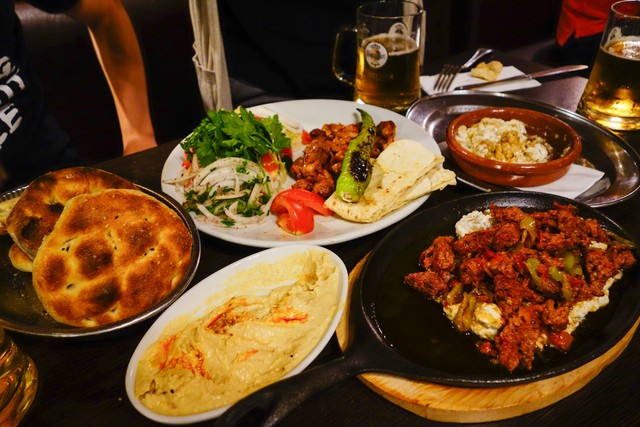
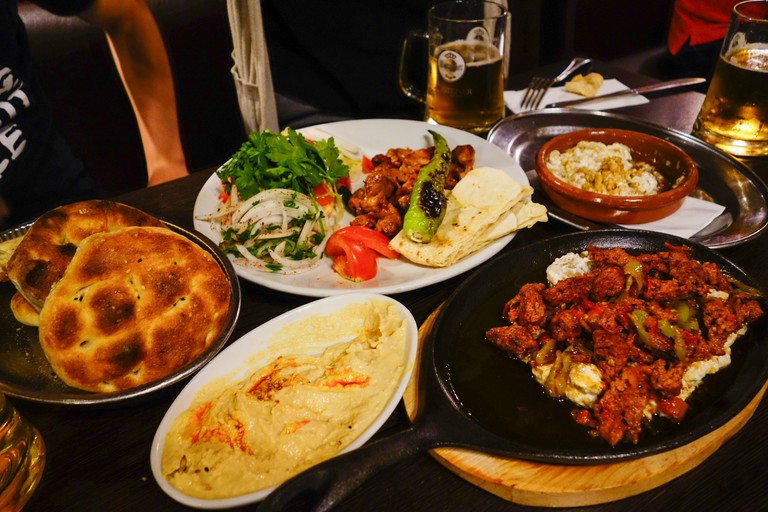
A table laden with various middle eastern dishes and drinks.
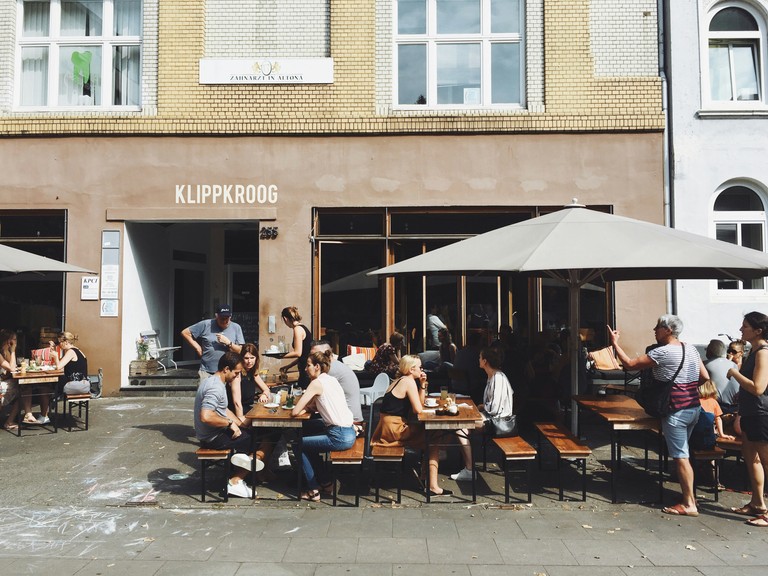
group of people sitting on benches with tables beside Klippkroog store front at daytime
black bicycle parked on sidewalk in between of buildings during daytime
Why students choose it

The short version

0
grade cutoffs. An exam decides it, not your school report
3
exam attempts a year, taken online
€0
what we charge you, ever
The university we work with

UMCH Medical Campus Hamburg

UMCH teaches the complete 6-year MD in English at a dedicated medical campus in Bahrenfeld, Hamburg. We are its official partner, so your application goes to a named admissions contact rather than a portal.

  • No minimum gradesThere is no grade cutoff. An online entrance exam and a short interview decide it, with up to three attempts a year.
  • German taught alongsideThe programme runs in English, but UMCH builds you to B2 German within roughly the first two years and runs medical German in year three — because your patients in Hamburg speak German.
  • Clinical training in German hospitalsYears three to six are taught across German partner teaching hospitals, so you graduate inside the system you want to work in.
  • 🇳🇴 A better price if you are NorwegianNorwegian students pay €25,000 a year against €29,800 for EU students and €34,800 for international students — and you do not pay the €595 application fee or the €4,500 enrolment fee that everyone else pays.
group of doctors walking on hospital hallway
group of people sitting on benches with tables beside Klippkroog store front at daytime
Six reasons

Why this is worth six years of your life

canal between buildings during nighttime
The reason most people come

No grade cutoff

German public medical schools take only students with a near-perfect school average, and then make them wait years for a place. UMCH does not. An online exam and a short interview decide it, with three attempts a year. Your ambition counts, not a decimal on an old report card.

city skyline across body of water during daytime
Where you'd live

Six years in Hamburg

Harbour beaches, the Speicherstadt, world-class music and food. Germany's second city is regularly ranked among the most liveable on earth, and it is a spectacular place to be twenty.

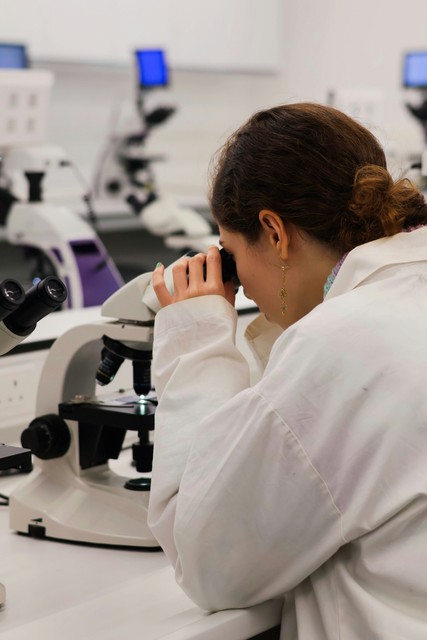
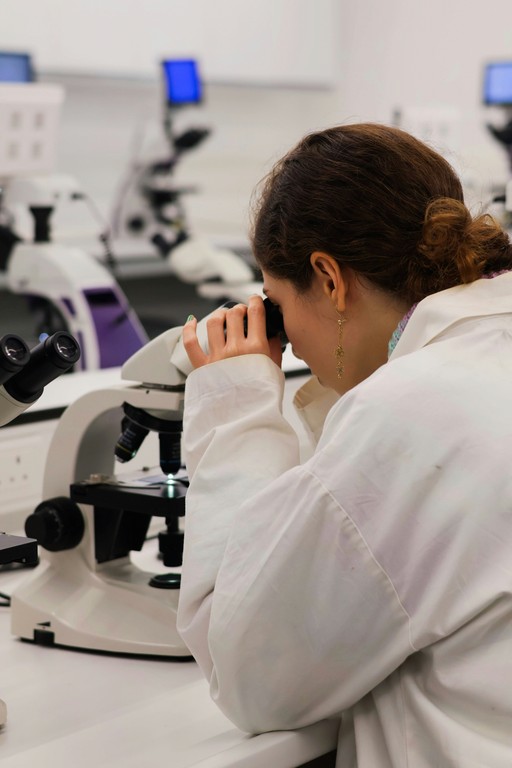
Scientist looking through a microscope in a lab.
The teaching

Small groups, not lecture halls of 400

A dedicated medical campus in Bahrenfeld with modern facilities and small-group teaching, backed by nearly eighty years of academic heritage from the parent university.

group of people sitting on benches with tables beside Klippkroog store front at daytime
Connectivity

Direct to Oslo, London, Dubai and Istanbul

About 120 direct destinations from an airport inside the city — Oslo in 1h25, London 1h40, Istanbul 3h10, Dubai 7h. No other city on our list comes close.

Istanbul mosque interior with grand chandelier and ornate dome
If you practise a faith

One of Germany's easiest cities

Many mosques, halal groceries on Steindamm and across Wilhelmsburg and Billstedt, English-language Anglican and international church services, and an active Jewish community.

two women sitting at the table
Afterwards

A German career path

You build German alongside your English-taught degree and graduate inside a health system that urgently needs doctors, with the salaries and security to match.

Not sure your grades are enough?
Send them over and we will tell you honestly, in a day or two — before you spend anything.
city skyline across body of water during daytime
€25,000
What Norwegian students pay — €4,800 less than EU students and €9,800 less than international students, and they do not pay the two joining fees at all.
The food

A port city eats well

Hamburg is a North Sea port, so the local canon is fish and preserved food: the Fischbrötchen (a roll of matjes herring, mackerel or North Sea shrimp), Labskaus (mashed potato, corned beef and beetroot with a fried egg), Pannfisch and, on the sweet side, the city's own Franzbrötchen — a flat, sticky cinnamon pastry you will end up buying far too often.

What you actually eat is more international. University canteen meals run about €3.10–6.90, a döner €7–10, a casual dinner €15–25. Groceries at Aldi, Lidl or Penny come to roughly €250–350 a month.

Halal is genuinely easy here — this is the biggest difference from Košice or Olomouc. The Steindamm and St Georg corridor near the main station is full of Turkish and Arab supermarkets and restaurants, with more in Sternschanze, Billstedt and Wilhelmsburg. You will never depend on a single community meat delivery. ⛔ Do not assume Turkish or Arab ownership means certified halal — ask about the supplier.

Vegan Hamburg is on another level from Central Europe. Dedicated plant-based restaurants, and every canteen has options.
A table laden with various middle eastern dishes and drinks.
a man holding a hot dog in a paper bag
black and brown pastries
Faith

Where to pray in Hamburg

Hamburg is one of the easiest cities in Germany to practise a faith in, simply because it is one of the most international. Nearly two million people, communities from all over the world, and infrastructure that has been there for decades.

Whatever you practise, you will find people doing the same thing here.

For Muslim students
Al-Nour Moschee on Sievekingsallee 191 serves a large Sunni congregation and publishes its prayer times, and the Centrum-Moschee on Böckmannstraße sits right by the main station. Halal groceries and restaurants run the length of Steindamm in St Georg, with more in Sternschanze, Billstedt and Wilhelmsburg — you will never depend on a single supplier the way you might in a smaller city.
For Christian students
St Thomas à Becket on Zeughausmarkt holds Anglican Sunday Eucharist at 10:30 and Hamburg International Church worships in English at 11:00 — two English-language congregations, which is rare. St Mary's Cathedral serves the Catholic community and Hamburg is historically Lutheran, so churches like St Michael's are part of the city's identity.
For Jewish students
The synagogue on Hohe Weide 34 holds Shabbat and holiday services, with Chabad Lubawitsch providing education, kosher food and community life alongside. ⚠️ Visits need advance registration and ID for security, so contact them before you go rather than turning up.
For Hindu students
There is a Hindu temple on Billstraße 77 in Rothenburgsort, and Hamburg's South Asian population means Indian groceries, festivals and community life are genuinely present rather than theoretical.
For Sikh students
Gurdwara Singh Sabha operates in northern Hamburg with regular services and langar — one of the reasons Hamburg is a materially easier place to live than the smaller student cities on this site.
Istanbul mosque interior with grand chandelier and ornate dome
brown and black concrete building under white clouds
group of people sitting on benches with tables beside Klippkroog store front at daytime
Living there

Hamburg is worth it, but it is not cheap

Housing is the whole budget. Studierendenwerk Hamburg runs 25 residences with about 4,390 places from around €310 a month, but demand far outstrips supply — apply months ahead. On the private market a shared-flat room averages about €650, and studios near the campus run €900–1,200.

Realistically: €850–1,050 a month in subsidised housing, €1,100–1,400 in a normal shared flat, €1,550–2,100 living alone. Add roughly €145 a month for statutory student health insurance. Transport is one of Germany's best deals — the student semester ticket is €226.80, about €37.80 a month, and the Deutschlandticket at €63 covers regional transport nationwide.

On safety, the honest version: Hamburg recorded about 213,600 offences in 2025, down around 5%, but crime is not evenly spread — police data put 43.9% of robberies in St Pauli and St Georg, the nightlife and main-station districts. Bicycle and phone theft are the realistic student risks. Emergency numbers are 112, 110 for police and 116117 for urgent-but-not-emergency care (⚠️ that line is German-only).

Register your address within two weeks of moving in. No Wohnungsgeberbestätigung from your landlord means no Anmeldung, and that blocks your bank account and your residence permit.
a living room filled with furniture and lots of windows
two women sitting at the table
woman in white coat holding green shopping cart
group of doctors walking on hospital hallway
B2
The German level UMCH builds you to within roughly two years, before clinical training begins.
See it for yourself

Hamburg from the air

city skyline across body of water during daytime
Admission

What you actually need, by where you're from

One online exam and one interview. No grade cutoff, no TMS admissions test, no IELTS certificate — your English is assessed in the interview itself.

🇳🇴 Norwegian students
A vitnemål with generell studiekompetanse and no failed subjects. No science subjects required.
🇬🇧 UK students
A-Levels or an equivalent completing 12 years of schooling — any subjects, with no failed subjects.
🌍 International students
Any 12-year school-leaving diploma (IB, Abitur or your national equivalent) with no failed subjects.
The exam
Biology, Chemistry and General Knowledge online — 25 questions each, 75 in total, 90 minutes, then a 15–20 minute interview. Up to three attempts a year, and we prepare you for all of it free.
No German to be admitted
You are admitted and taught in English. German is built alongside for patient contact — aim for B2 by the start of your clinical years.
Scientist looking through a microscope in a lab.
We do the paperwork with you, free
Transcripts, translations, the English certificate and the interview practice — all of it, at no cost to you.
The details

Everything on one line

Degree
Medicine (MD)
Duration
6 years
Language
100% English
Entrance exam
Online + interview
Tuition 🇳🇴
€25,000 / year
Tuition 🇪🇺 / 🌍
€29,800 / €34,800
Living costs
≈ €1,100–1,400 / month
German needed?
B2 by clinical years
Intake
October · rolling
Direct flights
Oslo · London · Dubai · Istanbul
All six side by side

How this compares with the other five

No university will ever publish this table, because it points at cheaper competitors. We will — it is the honest way to choose.

CountryUniversityEntrance examTuition / yearGetting to OsloMidwinter daylight
🇸🇰 SlovakiaUPJŠ KošiceBiology + Chemistry only€13,000Via Warsaw or Vienna8h20
🇨🇿 CzechiaPalacký OlomoucOnline, instant result€12,500Via Prague, 2h15 by train8h12
🇩🇪 GermanyYou are hereUMCH HamburgOnline + interview€25,000–34,800Direct, 1h257h30
🇱🇻 LatviaRSU RigaNone — grades decide€13,500Direct, 1h307h00
🇵🇱 PolandNCU Bydgoszcz50 questions + oral≈ €14,700Via Gdańsk, 1h25 by train7h36
🇨🇾 CyprusUNIC NicosiaNone — grades decide€22,000–24,000Direct, 4h359h50
Slovakia
UPJŠ Košice
Entrance exam
Biology + Chemistry only
Tuition / year
€13,000
Getting to Oslo
Via Warsaw or Vienna
Midwinter daylight
8h20
Czechia
Palacký Olomouc
Entrance exam
Online, instant result
Tuition / year
€12,500
Getting to Oslo
Via Prague, 2h15 by train
Midwinter daylight
8h12
GermanyYou are here
UMCH Hamburg
Entrance exam
Online + interview
Tuition / year
€25,000–34,800
Getting to Oslo
Direct, 1h25
Midwinter daylight
7h30
Latvia
RSU Riga
Entrance exam
None — grades decide
Tuition / year
€13,500
Getting to Oslo
Direct, 1h30
Midwinter daylight
7h00
Poland
NCU Bydgoszcz
Entrance exam
50 questions + oral
Tuition / year
≈ €14,700
Getting to Oslo
Via Gdańsk, 1h25 by train
Midwinter daylight
7h36
Cyprus
UNIC Nicosia
Entrance exam
None — grades decide
Tuition / year
€22,000–24,000
Getting to Oslo
Direct, 4h35
Midwinter daylight
9h50

Midwinter daylight is the shortest day of the year, for comparison Oslo gets about six hours. Tuition is the published annual rate for students starting in 2026/27 and we confirm your exact figure in writing before you commit.

Questions

The things people actually ask us

Can I study medicine in Germany in English?
Yes. UMCH Medical Campus Hamburg teaches the complete 6-year MD in English on a campus in Hamburg. Germany's public medical faculties teach in German and only take students with near-perfect school grades, so the English-taught route runs through this programme.
Do I need German to be admitted?
No. Admission and teaching are in English. But German becomes necessary at the bedside, which is why UMCH builds students to roughly B2 within the first two years and runs a medical German course in year three.
How much does it cost?
Tuition depends on nationality. Norwegian students pay €25,000 a year and they do not pay the €595 application fee or the €4,500 enrolment fee. EU/EEA students pay €14,900 per semester (€29,800 a year) and international students €17,400 per semester (€34,800 a year), both plus those two one-time fees. Living in Hamburg runs about €1,100–1,400 a month.
Is there an entrance exam?
Yes, but it is nothing like the German public-university system, where only near-perfect school grades get you a place. Biology, Chemistry and General Knowledge online — 25 questions each, 75 in total, 90 minutes — followed by a 15–20 minute interview. Up to three attempts a year, and we prepare you for both free.
Do I need IELTS or TOEFL?
No. Your English is assessed in the admissions interview, so no certificate is required in advance.
Is halal food easy to find in Hamburg?
Yes, this is one of Hamburg's real advantages. The Steindamm and St Georg corridor near the main station has Turkish and Arab supermarkets, butchers and restaurants, with more in Sternschanze, Billstedt and Wilhelmsburg. Unlike smaller Central European student cities, you are never dependent on one supplier.
Which mosque should I use in Hamburg?
Al-Nour Moschee on Sievekingsallee 191 is a large Sunni congregation that publishes current prayer times, and the Centrum-Moschee on Böckmannstraße in St Georg is close to the centre. Important: the Imam Ali Mosque, the 'Blue Mosque' still listed by many travel sites, was closed in July 2024 when the German Interior Ministry banned the organisation running it.
Is the degree recognised in Norway and the UK?
The qualification sits within the EU professional-recognition framework, the route Norwegian graduates use to apply to Helsedirektoratet, and UK graduates register with the GMC. Recognition always depends on the destination regulator's current requirements, and we check yours with you rather than promising 'recognised worldwide'.
How long does the visa and residence process take?
Hamburg currently advises roughly 8–10 weeks for initial residence-permit appointment and processing stages, and non-EU students must show financial resources of about €11,904 a year. Norwegians are covered by EEA free movement and follow a much simpler route. Plan in months, not weeks.
What is winter like in Hamburg?
Mild but grey and wet rather than snowy. January highs sit around 4°C and December gives you roughly seven and a half hours of daylight, with sunrise after 08:00 and sunset near 16:00. The wind off the North Sea does more damage than the thermometer suggests — buy a windproof coat, not the thickest one.
black bicycle parked on sidewalk in between of buildings during daytime
a man holding a hot dog in a paper bag
brown and black concrete building under white clouds
two women sitting at the table
Scientist looking through a microscope in a lab.
black and brown pastries
Istanbul mosque interior with grand chandelier and ornate dome
a living room filled with furniture and lots of windows
woman in white coat holding green shopping cart
group of doctors walking on hospital hallway

Medicine in Germany, in English, starting this October

No grade cutoff, no German needed to begin, rolling admission — and free, honest guidance from UMCH's official partner.

Medently
© 2026 Medently Malook and Medently Mussarat. All rights reserved.