


Study Medicine or Dentistry in Europe
Six years for medicine, five for dentistry, taught fully in English at EU universities whose degrees are recognised in Norway, the UK and across Europe. One entrance exam decides it at most of them — and we prepare you for it for free.


Three ways into a medical career abroad
Most people arrive on this page deciding between medicine and dentistry. If you have already started a degree somewhere else, there is a third door — you do not have to begin again in the first year.
 6 years · MD
Medicine
Two years learning how a healthy body works, one year learning what goes wrong with it, then three years in a teaching hospital learning to treat it.
5 years · DMDDentistry
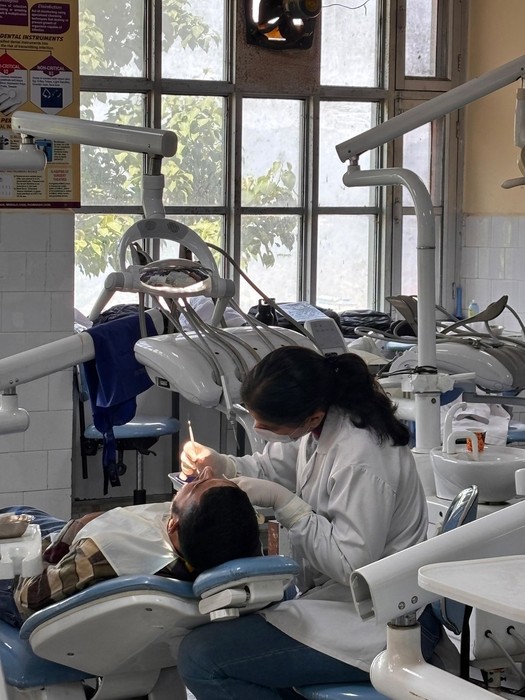
The same medical foundation as the doctors, plus hours in the phantom lab. You treat your first real patients in the university clinic in year three.
 Already studying
Transfer
Studying medicine or dentistry somewhere else and want to move? Your passed subjects are recognised, and you join the year they add up to rather than starting again.
Six universities on one map of Europe
Every dot is a city where you could be studying next year. Tap one to see what it costs, how you get in and when the year starts. Switch to dentistry and the map narrows to the three universities that teach it.
 🇸🇰 Košice, Slovakia
UPJŠ Košice
Partner universityThe universities we work with
Four are official Medently partners — UPJŠ, UPOL, UMCH and RSU. We also apply for you at NCU in Bydgoszcz and UNIC in Nicosia. Whichever you pick, you deal with us and we deal with them.

UPJŠ Košice
The medical faculty was founded in 1948 and has taught in English since 1992. Clinical training runs in the Košice teaching hospital, and there are more Norwegian students here than at any other university we work with.
Read about UPJŠ Košice
UPOL Olomouc
Palacký University was founded in 1573 and is one of the most respected addresses in Central Europe. You never have to travel for the entrance exam — it is taken online and you get the result the same day.
Read about UPOL Olomouc
UMCH Hamburg
Study medicine in Germany, in English, on a campus in Hamburg, with clinical rotations across twelve German teaching hospitals from the third year. Tuition is the one on this list that depends on where you are from.
Read about UMCH Hamburg
RSU Riga
Riga's health sciences university, founded in 1950, where one student in four comes from abroad. It is the only university we work with that runs a February intake, so you do not lose a year waiting for September.
Read about RSU Riga
NCU Bydgoszcz
Collegium Medicum has taught medicine in English since 2009, starting with Scandinavian students, and teaches in the Jurasz and Biziel university hospitals. Your tuition is locked for the whole programme when you enrol.
Read about NCU Bydgoszcz
UNIC Nicosia
One of the largest medical schools in the Mediterranean, with students from around ninety countries and a purpose-built campus in the Cypriot capital. English is the language of the whole island's higher education.
Read about UNIC NicosiaNot sure which of the six fits you? Book a free call and we compare them against your grades, your budget and where you actually want to live.
What 6 years actually looks like
The structure is the same everywhere in Europe. Two years learning how a healthy body works, one year learning what goes wrong with it, then three years in hospital learning to treat it.
Pre-clinical
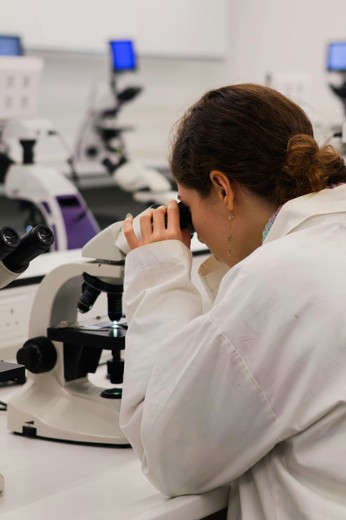
The foundation. Long days of anatomy, physiology and biochemistry, with dissection and lab work. This is the heaviest part of the degree for most students, and the part we prepare you for before you even arrive.

The bridge year
You move from healthy to sick. Pathology and pharmacology explain disease and the drugs that treat it, and you meet your first patients on the ward alongside a doctor.
Clinical years
You spend most of your week in the teaching hospital, rotating through the main specialities in small groups. By the final year you are taking histories, presenting cases and assisting in theatre.

How you finish
The final year ends with state exams in the core specialities. You graduate as a medical doctor — MUDr. in Slovakia and Czechia, written MD in English — and then apply for your licence in the country where you want to work.
What language do you actually work in?
Everything you are examined on is in English. Alongside it you take the university's own medical language classes in Slovak, Czech, Latvian, Polish or German, because from the clinical years you speak to real patients. Those classes are part of the timetable, not something you arrange yourself.
Medicine or dentistry — the honest comparison
Neither is the harder degree. They are different jobs, and the difference shows up long before you graduate.
There are three doors, and none of them is a grade average
This is the part that surprises people. There is no numerus clausus and no national points race at any of the six. What decides it is one exam, or your documents, depending on where you apply.
One entrance exam decides it
No grade requirements at all. You sit one exam built on biology and chemistry, and we give you the question banks, the mock exam and a study plan for free.
Your grades decide it
No entrance exam anywhere in the process. Your diploma and your documents are the application, and at UNIC a short online interview is added on top.
Diploma subjects, then an exam
No minimum grades, but biology plus chemistry or physics has to appear on your diploma. After that the entrance exam decides it.
Work out the whole degree, not just the first invoice
Pick a university and see what 6 years of medicine actually adds up to. Tuition figures are the published ones; living costs are an estimate and vary with the city and how you live.
UPJŠ Košice is in Košice, Slovakia, and the year starts in September. Your tuition is locked when you enrol here and does not rise year on year while you study.
Norwegian students at our four partner universities can fund the whole thing through Lånekassen — roughly 335,000 NOK a year for 2026/27 once you count basic support, the tuition loan and travel support. For NCU and UNIC we confirm your Lånekassen status with you before you commit to anything.
What the degree is worth when you finish
All six universities are EU-accredited and listed in the World Directory of Medical Schools, so the door is open in Europe and beyond. Doctors register through one route, dentists through another — never confuse the two.
🇪🇺 European Union and EEA
Your degree is automatically recognised across the EU and EEA under EU rules, so you can apply for a licence in any member country without sitting an extra exam.
🇳🇴 Norway
You apply to Helsedirektoratet for autorisasjon. Doctors then take the same LIS1 route as anyone who studied in Norway; dentists can start working once autorisasjon is granted. Hundreds of Norwegian doctors and dentists qualified exactly this way.
How autorisasjon and LIS1 work🇬🇧 United Kingdom
Doctors register with the General Medical Council and dentists with the General Dental Council. UPJŠ alone has a long record of graduates already practising in the UK.
🇺🇸 United States and Canada
All six are listed in the World Directory of Medical Schools, which is what makes graduates eligible to sit the USMLE and pursue licensure in the United States and Canada.
From this page to your first lecture, in four steps
You will never pay us anything. We are paid by the universities, which is why everything below is free to you.
Tell us where you are
Fill in the application on this site, or send us a message on WhatsApp. It takes a few minutes and costs nothing. We come back to you the same day with the universities that fit your grades, your budget and your timeline.
We get your papers right
Diploma, transcript, passport, medical certificate, translations, apostilles. We check every document before it goes anywhere, because a missing stamp is the single most common reason an application is rejected.
You prepare, and you sit the exam
You get the question banks, the mock exams and a study plan for the university you chose, at no cost. If your university admits on documents instead, we build the file with you.
You get in, and we move you in
Acceptance letter, tuition payment, enrolment paperwork, visa or residence registration, Lånekassen, somewhere to live and other students to live near. We stay with you until your first lecture.
Decide with numbers, not with a feeling
Three pages on this site answer the questions people ask us most often, and none of them needs an account.
Can I get in?
Put in your subjects and grades and see which universities you already meet the requirements for, with every requirement written out in full.
Check your requirementsHow to apply, step by step
The whole application walked through in order: which documents, which translations, which deadlines, and what happens after you press send.
Walk through the applicationEntrance exam dates
Every sitting we know about, per university, with what the exam contains and how to register for it. Updated as universities publish.
See the datesEverything people ask before they apply
What programmes does Medently actually cover?
How long does it take to become a doctor or a dentist in Europe?
Do I need top grades to get in?
Do I need biology, chemistry or physics from school?
Is the whole degree really taught in English?
What does it cost in total?
Why is UMCH in Hamburg priced differently?
Can I get Lånekassen support?
Which is harder to get into, medicine or dentistry?
Is a degree from these universities recognised in Norway and the UK?
What if I fail the entrance exam?
I already study something else. Can I transfer in?
What does Medently charge for this?
Studying medicine and dentistry in Europe in English: the short version
Studying medicine or dentistry abroad in English is no longer the fallback plan — for thousands of European students it is the plan. The degrees are the same length as at home, six years for medicine and five for dentistry, and they end in the same qualification: a doctor or a dentist who can apply for a licence anywhere in the EU and EEA. What changes is how you get in. Instead of competing on a grade average against a national cohort, you sit one entrance exam built on biology and chemistry, or you apply on your documents, and a prepared student with ordinary grades has a real chance.
Medently works with six universities. Pavol Jozef Šafárik University in Košice, Slovakia charges €13,000 a year for medicine and €13,500 for dentistry, with a written exam in Košice and a September start. Palacký University in Olomouc, Czech Republic charges €12,500 for medicine and €14,000 for dentistry, and runs its entrance exam online. UMCH Medical Campus Hamburg teaches medicine in Germany, in English, from €25,000 a year for Norwegian students, and starts in October. Rīga Stradiņš University in Latvia charges €13,500 for medicine and €15,500 for dentistry, has no entrance exam at all and is the only one with a February intake. NCU Collegium Medicum in Bydgoszcz, Poland charges about €14,700 a year, locked for the whole programme. The University of Nicosia in Cyprus charges €22,000 a year and admits on grades with rolling admission. All six teach the whole degree in English and all six appear in the World Directory of Medical Schools.
The part students underestimate is never the studying — it is the paperwork and the timing. Which documents need translating and which need an apostille, when the exam registration window opens, what a postmark deadline means, how Lånekassen treats a foreign tuition invoice, and where to live in a city you have never been to. That is the part we do with you, and students pay us nothing for it. The universities pay us, so the guidance, the exam preparation, the document work and the help settling in are free.
If you are still deciding between medicine and dentistry, the honest test is what a normal Tuesday looks like in ten years. Medicine keeps every door open for longer — you choose your speciality years after you graduate, and the range runs from surgery to psychiatry to research. Dentistry closes the loop faster: you are working with your hands from the phantom lab in year one, you have your own patients by year three, and you can run your own practice soon after you qualify. Neither is the harder degree. They are different jobs, and the one that suits you is the one whose worst week you would still turn up for.
Ready to start?
Apply in a few minutes. We check your documents, get you ready for the exam and stay with you until your first lecture. It costs you nothing.
Study Medicine or Dentistry in Europe
Six years for medicine, five for dentistry, taught fully in English at EU universities whose degrees are recognised in Norway, the UK and across Europe. One entrance exam decides it at most of them — and we prepare you for it for free.
Three ways into a medical career abroad
Most people arrive on this page deciding between medicine and dentistry. If you have already started a degree somewhere else, there is a third door — you do not have to begin again in the first year.
6 years · MDMedicine
Two years learning how a healthy body works, one year learning what goes wrong with it, then three years in a teaching hospital learning to treat it.
5 years · DMDDentistry
The same medical foundation as the doctors, plus hours in the phantom lab. You treat your first real patients in the university clinic in year three.
Already studyingTransfer
Studying medicine or dentistry somewhere else and want to move? Your passed subjects are recognised, and you join the year they add up to rather than starting again.
Six universities on one map of Europe
Every dot is a city where you could be studying next year. Tap one to see what it costs, how you get in and when the year starts. Switch to dentistry and the map narrows to the three universities that teach it.
🇸🇰 Košice, SlovakiaUPJŠ Košice
Partner universityThe universities we work with
Four are official Medently partners — UPJŠ, UPOL, UMCH and RSU. We also apply for you at NCU in Bydgoszcz and UNIC in Nicosia. Whichever you pick, you deal with us and we deal with them.
UPJŠ Košice
The medical faculty was founded in 1948 and has taught in English since 1992. Clinical training runs in the Košice teaching hospital, and there are more Norwegian students here than at any other university we work with.
Read about UPJŠ KošiceUPOL Olomouc
Palacký University was founded in 1573 and is one of the most respected addresses in Central Europe. You never have to travel for the entrance exam — it is taken online and you get the result the same day.
Read about UPOL OlomoucUMCH Hamburg
Study medicine in Germany, in English, on a campus in Hamburg, with clinical rotations across twelve German teaching hospitals from the third year. Tuition is the one on this list that depends on where you are from.
Read about UMCH HamburgRSU Riga
Riga's health sciences university, founded in 1950, where one student in four comes from abroad. It is the only university we work with that runs a February intake, so you do not lose a year waiting for September.
Read about RSU RigaNCU Bydgoszcz
Collegium Medicum has taught medicine in English since 2009, starting with Scandinavian students, and teaches in the Jurasz and Biziel university hospitals. Your tuition is locked for the whole programme when you enrol.
Read about NCU BydgoszczUNIC Nicosia
One of the largest medical schools in the Mediterranean, with students from around ninety countries and a purpose-built campus in the Cypriot capital. English is the language of the whole island's higher education.
Read about UNIC NicosiaNot sure which of the six fits you? Book a free call and we compare them against your grades, your budget and where you actually want to live.
What 6 years actually looks like
The structure is the same everywhere in Europe. Two years learning how a healthy body works, one year learning what goes wrong with it, then three years in hospital learning to treat it.
Pre-clinical
The foundation. Long days of anatomy, physiology and biochemistry, with dissection and lab work. This is the heaviest part of the degree for most students, and the part we prepare you for before you even arrive.
The bridge year
You move from healthy to sick. Pathology and pharmacology explain disease and the drugs that treat it, and you meet your first patients on the ward alongside a doctor.
Clinical years
You spend most of your week in the teaching hospital, rotating through the main specialities in small groups. By the final year you are taking histories, presenting cases and assisting in theatre.
How you finish
The final year ends with state exams in the core specialities. You graduate as a medical doctor — MUDr. in Slovakia and Czechia, written MD in English — and then apply for your licence in the country where you want to work.
What language do you actually work in?
Everything you are examined on is in English. Alongside it you take the university's own medical language classes in Slovak, Czech, Latvian, Polish or German, because from the clinical years you speak to real patients. Those classes are part of the timetable, not something you arrange yourself.
Medicine or dentistry — the honest comparison
Neither is the harder degree. They are different jobs, and the difference shows up long before you graduate.
There are three doors, and none of them is a grade average
This is the part that surprises people. There is no numerus clausus and no national points race at any of the six. What decides it is one exam, or your documents, depending on where you apply.
One entrance exam decides it
No grade requirements at all. You sit one exam built on biology and chemistry, and we give you the question banks, the mock exam and a study plan for free.
Your grades decide it
No entrance exam anywhere in the process. Your diploma and your documents are the application, and at UNIC a short online interview is added on top.
Diploma subjects, then an exam
No minimum grades, but biology plus chemistry or physics has to appear on your diploma. After that the entrance exam decides it.
Work out the whole degree, not just the first invoice
Pick a university and see what 6 years of medicine actually adds up to. Tuition figures are the published ones; living costs are an estimate and vary with the city and how you live.
UPJŠ Košice is in Košice, Slovakia, and the year starts in September. Your tuition is locked when you enrol here and does not rise year on year while you study.
Norwegian students at our four partner universities can fund the whole thing through Lånekassen — roughly 335,000 NOK a year for 2026/27 once you count basic support, the tuition loan and travel support. For NCU and UNIC we confirm your Lånekassen status with you before you commit to anything.
What the degree is worth when you finish
All six universities are EU-accredited and listed in the World Directory of Medical Schools, so the door is open in Europe and beyond. Doctors register through one route, dentists through another — never confuse the two.
🇪🇺 European Union and EEA
Your degree is automatically recognised across the EU and EEA under EU rules, so you can apply for a licence in any member country without sitting an extra exam.
🇳🇴 Norway
You apply to Helsedirektoratet for autorisasjon. Doctors then take the same LIS1 route as anyone who studied in Norway; dentists can start working once autorisasjon is granted. Hundreds of Norwegian doctors and dentists qualified exactly this way.
How autorisasjon and LIS1 work🇬🇧 United Kingdom
Doctors register with the General Medical Council and dentists with the General Dental Council. UPJŠ alone has a long record of graduates already practising in the UK.
🇺🇸 United States and Canada
All six are listed in the World Directory of Medical Schools, which is what makes graduates eligible to sit the USMLE and pursue licensure in the United States and Canada.
From this page to your first lecture, in four steps
You will never pay us anything. We are paid by the universities, which is why everything below is free to you.
Tell us where you are
Fill in the application on this site, or send us a message on WhatsApp. It takes a few minutes and costs nothing. We come back to you the same day with the universities that fit your grades, your budget and your timeline.
We get your papers right
Diploma, transcript, passport, medical certificate, translations, apostilles. We check every document before it goes anywhere, because a missing stamp is the single most common reason an application is rejected.
You prepare, and you sit the exam
You get the question banks, the mock exams and a study plan for the university you chose, at no cost. If your university admits on documents instead, we build the file with you.
You get in, and we move you in
Acceptance letter, tuition payment, enrolment paperwork, visa or residence registration, Lånekassen, somewhere to live and other students to live near. We stay with you until your first lecture.
Decide with numbers, not with a feeling
Three pages on this site answer the questions people ask us most often, and none of them needs an account.
Can I get in?
Put in your subjects and grades and see which universities you already meet the requirements for, with every requirement written out in full.
Check your requirementsHow to apply, step by step
The whole application walked through in order: which documents, which translations, which deadlines, and what happens after you press send.
Walk through the applicationEntrance exam dates
Every sitting we know about, per university, with what the exam contains and how to register for it. Updated as universities publish.
See the datesEverything people ask before they apply
What programmes does Medently actually cover?
How long does it take to become a doctor or a dentist in Europe?
Do I need top grades to get in?
Do I need biology, chemistry or physics from school?
Is the whole degree really taught in English?
What does it cost in total?
Why is UMCH in Hamburg priced differently?
Can I get Lånekassen support?
Which is harder to get into, medicine or dentistry?
Is a degree from these universities recognised in Norway and the UK?
What if I fail the entrance exam?
I already study something else. Can I transfer in?
What does Medently charge for this?
Studying medicine and dentistry in Europe in English: the short version
Studying medicine or dentistry abroad in English is no longer the fallback plan — for thousands of European students it is the plan. The degrees are the same length as at home, six years for medicine and five for dentistry, and they end in the same qualification: a doctor or a dentist who can apply for a licence anywhere in the EU and EEA. What changes is how you get in. Instead of competing on a grade average against a national cohort, you sit one entrance exam built on biology and chemistry, or you apply on your documents, and a prepared student with ordinary grades has a real chance.
Medently works with six universities. Pavol Jozef Šafárik University in Košice, Slovakia charges €13,000 a year for medicine and €13,500 for dentistry, with a written exam in Košice and a September start. Palacký University in Olomouc, Czech Republic charges €12,500 for medicine and €14,000 for dentistry, and runs its entrance exam online. UMCH Medical Campus Hamburg teaches medicine in Germany, in English, from €25,000 a year for Norwegian students, and starts in October. Rīga Stradiņš University in Latvia charges €13,500 for medicine and €15,500 for dentistry, has no entrance exam at all and is the only one with a February intake. NCU Collegium Medicum in Bydgoszcz, Poland charges about €14,700 a year, locked for the whole programme. The University of Nicosia in Cyprus charges €22,000 a year and admits on grades with rolling admission. All six teach the whole degree in English and all six appear in the World Directory of Medical Schools.
The part students underestimate is never the studying — it is the paperwork and the timing. Which documents need translating and which need an apostille, when the exam registration window opens, what a postmark deadline means, how Lånekassen treats a foreign tuition invoice, and where to live in a city you have never been to. That is the part we do with you, and students pay us nothing for it. The universities pay us, so the guidance, the exam preparation, the document work and the help settling in are free.
If you are still deciding between medicine and dentistry, the honest test is what a normal Tuesday looks like in ten years. Medicine keeps every door open for longer — you choose your speciality years after you graduate, and the range runs from surgery to psychiatry to research. Dentistry closes the loop faster: you are working with your hands from the phantom lab in year one, you have your own patients by year three, and you can run your own practice soon after you qualify. Neither is the harder degree. They are different jobs, and the one that suits you is the one whose worst week you would still turn up for.
Ready to start?
Apply in a few minutes. We check your documents, get you ready for the exam and stay with you until your first lecture. It costs you nothing.
