Study Medicine in English at NCU in Bydgoszcz
A 6-year English M.D. at Collegium Medicum in Bydgoszcz — teaching Scandinavian students since 2009, with tuition locked for the whole programme. Register by 15 September to sit the last entrance exam round and start on 1 October 2026.
Programs at a glance
Teaching medicine in English since 2009
Collegium Medicum in Bydgoszcz is the medical faculty of Nicolaus Copernicus University, one of Poland's top research universities.
The English M.D. opened in 2009 with Scandinavian students, and clinical training runs through two university hospitals.

An EU degree with a Scandinavian history
NCU's medical degree is recognised across the European Union and the EEA, the programme is accredited by the Polish Accreditation Committee (PKA), and the university is listed in the World Directory of Medical Schools — making graduates eligible to sit the USMLE. The English programme's very first cohort in 2009 came from Scandinavia, and Norwegian graduates follow the standard Helsedirektoratet authorisation route home.
One online exam decides. Not your grades.
NCU sets no grade minimums: 50 online questions and a short oral the next day decide your place. Medently prepares you for both, free, with NCU's own sample tests.
No grade minimums
The subjects just need to be on your diploma — and with only a combined Natural Science subject, NCU assesses your case individually. The exam decides, and we prepare you for it, free.
NCU admits in rounds. Register by 25 August to sit the 8 and 9 September exams, or by 15 September for the last round on 23 and 24 September. Results come within days, and studies begin on 1 October 2026.
NCU sent Medently their official topic list for the admission test and the interview. All of it is below, in their own words, so you can see exactly what you are walking into before you register.
The interview questions
NCU calls these the general questions, and they belong to the oral only. The wording is theirs, not ours. We run a practice oral with you on exactly these, free.
- Motivation, interest, career choice. Why did you choose this study programme?
- Tell us about yourself, experience, interests etc.
- Why this medical school? What do you know about this school?
- Your strengths and attributes, how you handle stress, main weaknesses.
- Concerns about studying the selected study programme.
- Knowledge of the medical profession, other professions allied to medicine. Recent developments.
- What medical publications do you read?
The science topics
The written test draws its fifty questions from these, and the oral returns to the sciences again. The weighting beside each subject is the exam's own, so you can see where your revision hours are worth the most.
Biology21 topics · 30 of the 50 written questions
- The structure, function and examples of main molecules (carbohydrates, proteins, nucleic acids and lipids). The importance of water for organisms, based on its physico-chemical properties.
- The characteristic features of the protein enzyme structure and the course of enzymatic catalysis. The examples of different ways to regulate enzyme activity in a cell. The general principles of metabolism. The substrates and products of major catabolic pathways (photosynthesis, aerobic respiratory stages, anaerobic respiration, glycolysis).
- Similarities and differences in structure and function between Prokaryotic and Eukaryotic cells. Cell surface structures. Motility. Internal organization. Membrane. Compartmentalization. Cytoskeleton. Endomembrane system: endoplasmic reticulum, Golgi Apparatus and lysosomes, nucleus, ribosomes, mitochondria. The course of plasmolysis in plant cells, referring to the phenomenon of osmosis.
- Cell cycle. Mitosis and meiosis. Cellular organization of genetic material. Phases of cell cycle. The stages of mitosis and meiosis. A comparison of mitosis and meiosis.
- Viruses. Structure of viruses. General features of viral replication cycles.
- The importance of arthropods in nature and human life. The characteristics of fish, amphibians, reptiles, birds and mammals in connection with the environment and lifestyle.
- Chromosomal and molecular basis of inheritance. The chromosomal basis of sex. Inheritance of X- and Y-linked genes. Alternation of chromosome number and structure. Human disorders due to chromosomal alternation. Inheritance of organelle genes. The examples of inheriting according to Mendel's laws. DNA as genetic material. Structural model of DNA. Chromosomes' structure.
- Genetic mechanisms. The flow of genetic information. Replication: Transcription (alternation of mRNA ends, RNA splicing). Translation. Genetic code. Type of mutations. Regulation of gene expression (promoters, transcription factors). Tools to control gene expression.
- Tissues and body membranes. Structure and physiology of connective, muscle, epithelial and nervous tissue; serous, mucous, synovial and cutaneous membranes.
- Nervous system. Organization of nervous system. The central nervous system. The organization of human brain. Peripheral nervous system: motor and autonomic nervous system. Neurons, synapses and signalling. Neurons structure and function. Resting and action potential. Conduction of action potentials. Examples of neurotransmitters.
- Hormones and endocrine system. Intercellular communication. Endocrine tissues and organs. Chemical classes of hormones. Multiple effects of hormones. Simple hormone pathways. Feedback regulation.
- Immune system. Innate and adaptive immunity. Antigen. Antibody. The humoral immune response. The cell-mediated immune response. Inflammatory response. Immunological memory. Allergies.
- Cardiovascular system. Organization of human circulatory system. Heart and heart's rhythmic beat. Structure of the heart. Blood vessels structure and function. Blood pressure. Blood composition and function.
- Respiratory system. Organization of human respiratory system. Function and basic structure of haemoglobin and myoglobin.
- Musculoskeletal system. Organization and function of human skeletal and muscular system, general structure of bones. Classification of junctions and joints. Classification of skeleton.
- Visual and auditory sensory systems. Visual apparatus. Eyeball, accessory visual apparatus. Optic nerve. Nerves of extraocular muscles (III, IV, VI). Pupillary light reflex and accommodation reaction.
- Auditory and vestibular apparatuses. External, middle and internal ear. Vestibulocochlear nerve. Sound pathway.
- Organization of human digestive system. Chemical digestion in the human digestive system. Examples and location of digestive enzymes. The correct glucose levels. What information cholesterol measurement provides us. Role of water in maintaining health.
- Human reproduction and development. Gametogenesis. Conception.
- The basic elements of the organism's ecological niche. The trophic levels of producers and consumers of organic matter, and among the latter - herbivores, predators and destructors. The similarities and differences between different interspecies relationships (like competition, predation, herbivorousness and parasitism).
- The basic sources of knowledge about the mechanisms and course of evolution, i.e. divergent and convergent evolution, homologous and analogous structures.
Chemistry19 topics · 12 of the 50 written questions
- Modern atomic theory. Elements and atomic number. Isotopes and atomic weight.
- The Periodic Table. Symbols of elements. The periodic table and some characteristics of different groups. Electronic structure of atoms and electron configurations. Electron configurations and the periodic table.
- Molecular compounds. Covalent bonds and the periodic table. Multiple covalent bonds and coordinate covalent bonds. Characteristics of molecular compounds. Molecular formulas and Lewis structures. Polar covalent bonds and electronegativity, polar molecules. Naming binary molecular compounds.
- Classification and balancing of chemical reactions. Classes of chemical reactions. Chemical equations and balancing chemical equations. Acids, bases, and neutralization reactions. Redox reactions.
- Mole and mass relationships. The mole and Avogadro's number.
- Reaction rates and chemical equilibria. Endothermic and exothermic chemical reactions. Factors that influence chemical reaction rates.
- Physical quantities. Metric system of units. Metric units of length, mass, volume.
- Fundamental chemical laws. Law of conservation of mass, definite proportions, multiple proportions.
- Mole concept and chemical formulas. Calculations involving chemical equations. Calculations involving volume and concentration.
- Acids and bases in aqueous solution, some common acids and bases, the Bronsted-Lowry definition of acids and bases, acid dissociation constants, acid and base strength.
- Buffers measuring acidity in aqueous solution: pH. Buffer solutions. Titration.
- Alkanes. The nature of organic molecules. The structure of organic molecules: alkanes and their isomers. Drawing organic structures. Naming alkanes, cycloalkanes.
- Alkenes and Alkynes. Naming alkenes and alkynes. The structure of alkenes, cis-trans isomerism.
- Aromatic compounds and the structure of benzene. Naming aromatic compounds.
- Alcohols, some common alcohols. Naming alcohols. Phenols, some common phenols.
- Carboxylic acids and their derivatives, properties and names. Some common carboxylic acids.
- Amino acids structures. Chemical properties of proteins.
- Enzymes and vitamins. Catalysis by enzymes. How enzymes work. Some of vitamins and minerals.
- Nucleic acids and protein synthesis. DNA, chromosomes, and genes. Composition of nucleic acids. The structure of nucleic acid chains. Base pairing in DNA: the Watson-Crick model.
Physics13 topics · 8 of the 50 written questions
- Scalar and vector physical quantities, SI system of units.
- Velocity and acceleration. Uniform motion and uniformly accelerated motion.
- Force, mass and weight. Newton's laws of motion.
- Work, kinetic energy, potential energy, power. Energy transformations. Conservation of energy.
- Temperature, heat and internal energy. Thermal equilibrium, calorimetry. Specific heat and latent heat. First law of thermodynamics.
- Pressure. Pascal's principle, Archimedes' principle, buoyant force.
- Electrostatics. Electric charge, electric field, field lines. Coulomb's law.
- Electric current, voltage. Ohm's law, electric resistance. Resistors in series and parallel.
- Magnets and magnetic fields. Magnetic induction. Current as a source of magnetic field.
- Mechanical and electromagnetic waves; wavelength, period, frequency, speed of wave. Electromagnetic spectrum.
- Geometric optics. Law of reflection and refraction. Index of refraction. Images in mirrors and lenses, focal point, focal length, optical power, lens equation.
- Atomic nucleus. Natural radioactivity: alpha, beta and gamma decay. The radioactive decay law; the radioactive half-life.
- Photon theory of light, photon energy. Atomic spectra, energy levels, transitions, absorption and emission.
Source: "Topics for the admission test and interview", NCU Collegium Medicum in Bydgoszcz, sent to Medently on 10 August 2026.
What you need — and what you don't
NCU keeps admission fair and concrete. Here is exactly what is asked of you — and what is not.
The subjects on your diploma, and one exam
NCU keeps it refreshingly simple in every school system: no grade minimums at all — the entrance exam decides.
- The exam — 50 online questions in biology, chemistry and physics, then a short oral the next day. We prepare you, free, with NCU's own sample tests.
- 🇳🇴 Norwegian students — Biology and Chemistry or Physics as separate subjects on your diploma — that means Biology 1 or 2, plus Chemistry 1 or 2 or Physics 1 or 2 — with any grades. If you only have the combined Natural Science subject, NCU assesses your case individually, so ask us first. No English certificate — your English is tested inside the exam.
- 🇬🇧 UK students — Biology plus Chemistry or Physics among your A-Levels or GCSEs, any grades. We confirm the English-proof rule for your case.
- 🌍 International students — a diploma listing Biology plus Chemistry or Physics, with an apostille and a NAWA recognition statement (we handle the paperwork), and B2 English proof — we check which documents count for your country. A combined science subject instead of separate classes? NCU can assess it individually.
No grade minimums. No English test. No agency fee.
Everything below is something you will not have to do:
- No minimum grades — NCU sets no cut-off for the subjects on your diploma. The exam decides.
- No perfect subject combination — if your diploma shows a combined Natural Science subject instead of separate Biology and Chemistry, NCU can still assess your case individually. Send us your diploma and we arrange that check with the university.
- No English certificate for Norwegians — your English is checked inside the entrance exam, not with an IELTS gate.
- No agency fees — Medently guides you through everything, 100% free.
- No wasted year — sit the September exam and start on 1 October, weeks later.
From applying to accepted, step by step
NCU is not on our online application form yet, so your application starts with one message — and we handle the rest with you.
Message us on WhatsApp
NCU applications run personally through our team. Send one message, and the same day we check that Biology and Chemistry or Physics are on your diploma. If you only have a combined Natural Science subject, we take it straight to NCU for their individual assessment.
We build your NCU file together
Registration in NCU's online admission system, the 85 PLN fee, the apostille and the NAWA recognition statement. We start the paperwork early so nothing blocks your start.
We register you for an exam round
Register by 25 August for the 8 and 9 September exams, or by 15 September for the final round on 23 and 24 September. We confirm everything with NCU's admissions team directly.
You sit the exam — prepared
Fifty online questions with a minute each, then a short oral the next day, usually online. You prepare with NCU's official sample tests and our coaching, free.
We take you from result to 1 October
Results come within days. We walk you through the offer, the first tuition payment, housing and the move to Bydgoszcz — studies open on 1 October.
Medently support includes
- Diploma subject check — the same day you ask
- Free exam preparation with NCU's official sample tests
- Registration in NCU's admission system & exam-round planning
- Apostille and NAWA recognition paperwork, started early
- Visa, accommodation & relocation support
Rounds close fast
Register by 25 August for the September 8 and 9 exams, or by 15 September for the last round. The earlier you start, the calmer the paperwork.
Two university hospitals and a simulation centre
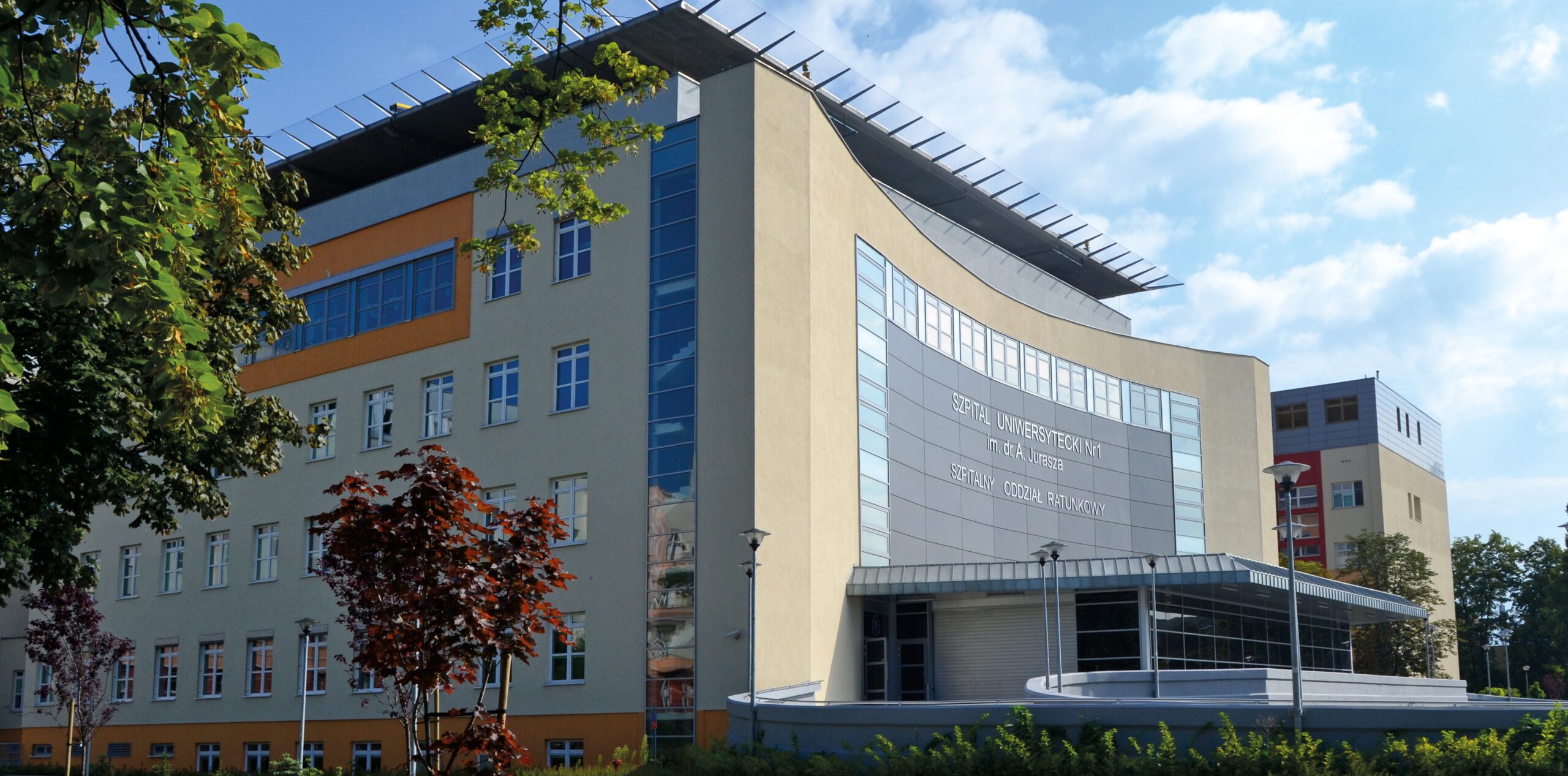
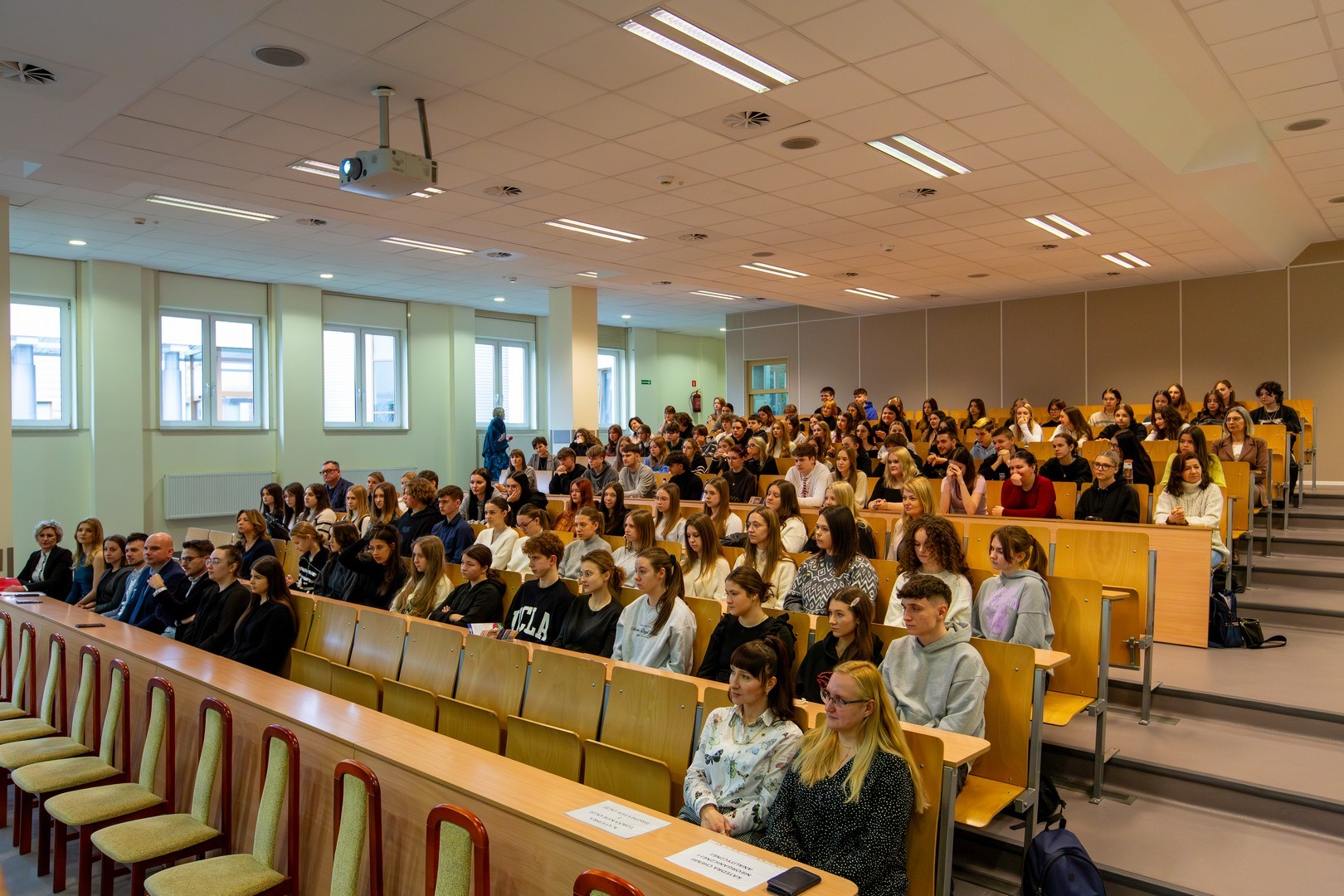
Pre-clinical years run at Collegium Medicum's campus, with clinical training at the Jurasz and Biziel university hospitals and skills training in the Medical Simulation Centre.



Somewhere to call home
International dormitory
NCU's Student House no. 3 stands right next to the Jurasz university hospital — a ready-made international community. We help you apply for a place.
Private rental
Prefer your own flat? Bydgoszcz is one of Poland's most affordable cities, and we help you find safe, well-located housing before you arrive.
Per month including rent — Bydgoszcz is one of the most affordable student cities in Poland.
A real student city on the Brda river
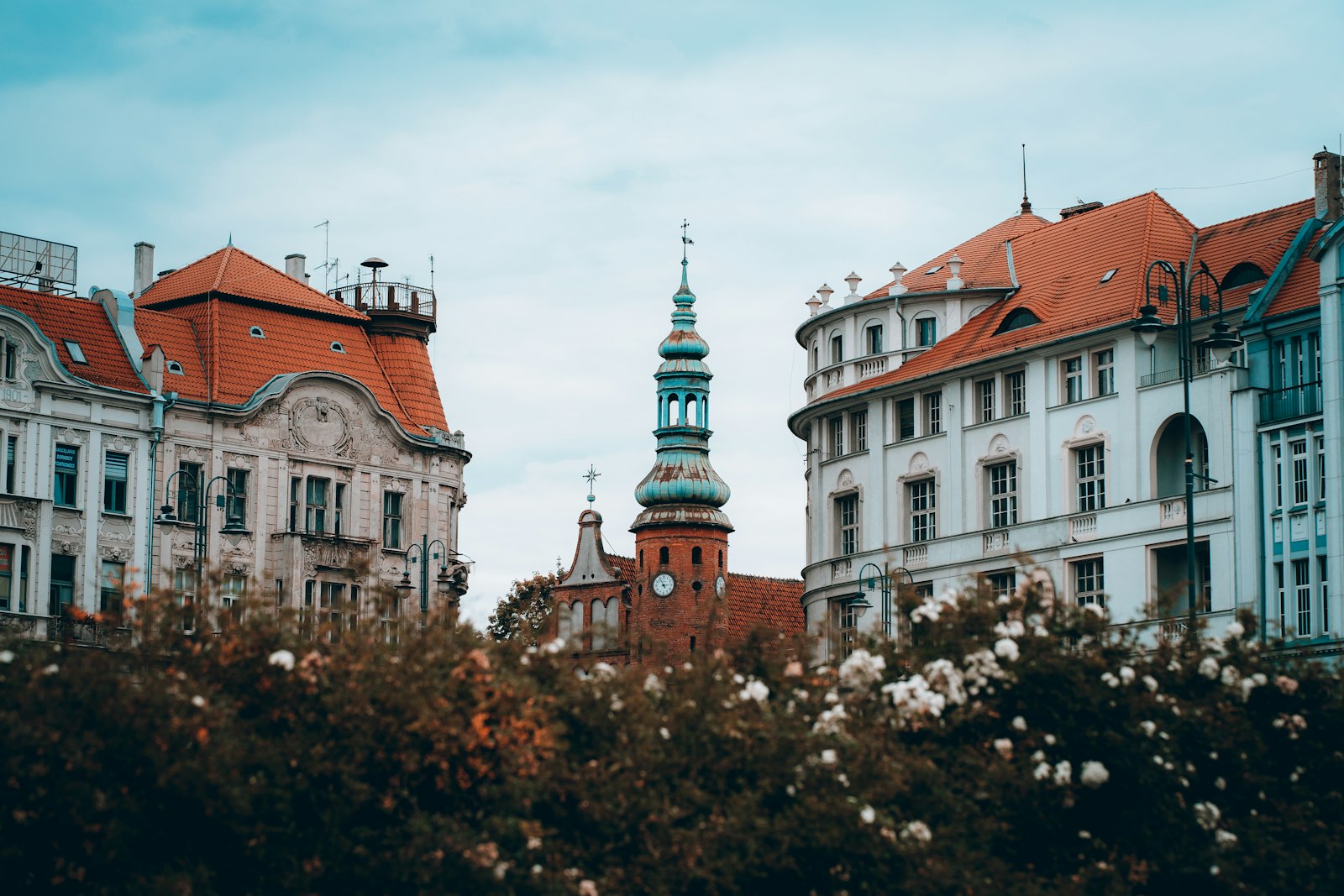
Bydgoszcz is an easy city to be a student in — a walkable centre along the Brda river, granaries and Art Nouveau streets, its own airport, and living costs among the lowest of any city in our network. The international student community at Collegium Medicum makes settling in quick.
The complete guide to studying at NCU
About NCU Collegium Medicum in Bydgoszcz
Nicolaus Copernicus University (NCU) is one of Poland's leading universities and one of its ten government-designated IDUB research universities. Its medical faculty, Collegium Medicum, sits in Bydgoszcz and carries the name of the pioneering surgeon Ludwik Rydygier — a medical school with roots going back to 1984.
The 6-year Medical Programme in English opened in 2009, and its very first students came from Scandinavia. That Nordic thread has never broken: today over 400 international students from around 40 countries study at Collegium Medicum, and Norwegian is a language you will genuinely hear in the corridors.
Clinical teaching runs through two university hospitals in Bydgoszcz — University Hospital No. 1 (Jurasz) and University Hospital No. 2 (Biziel) — alongside a modern Medical Simulation Centre where clinical skills are trained before you ever touch a patient.
Why study medicine at NCU?
Three things stand out. First, the admission is genuinely fair: there are no grade minimums at all — Biology plus Chemistry or Physics simply need to appear on your diploma, and the entrance exam decides the rest. Even a combined Natural Science subject can qualify after NCU's individual assessment — send us your diploma and we arrange that check. A modest vitnemål costs you nothing here.
Second, the price is locked: tuition is PLN 63,000 per year — about €14,700 — and NCU fixes it in writing for the entire six years, so the fee you start with is the fee you finish with. Third, Norwegians skip the English-certificate gate entirely: your English is assessed inside the entrance exam, not with an IELTS requirement.
The entrance exam, explained
The written test is taken online from home under proctoring: 50 multiple-choice questions — 30 in biology, 12 in chemistry and 8 in physics — with one point per question and one minute per question. Score 25 or more and you advance to the oral exam the next day.
The oral is a short online conversation covering the sciences, your motivation and your English, scored up to 75 points. Your final score is half your written points plus the oral, and 70 in total wins admission. It is usually held online, and NCU can arrange it on site if you prefer. Medently prepares you for both stages free, using NCU's own official sample tests.
Admission requirements & application process
Eligibility is simple: a secondary-school diploma that includes Biology and at least one of Chemistry or Physics, with no minimum grades — and if your diploma carries a combined Natural Science subject instead, NCU assesses it individually, a check we arrange for you. Applications go through NCU's online admission system with an 85 PLN fee (about €20), and the diploma needs an apostille plus a NAWA recognition statement — paperwork with real deadlines, which is why we start it early and handle it with you.
NCU admits in rounds through the summer. The current rounds are: register by 25 August for the 8 and 9 September exams, or by 15 September for the final round on 23 and 24 September. Results arrive within days, and the academic year opens on 1 October.
Accreditation & degree recognition
The Medicine programme holds accreditation from the Polish Accreditation Committee (PKA) and the Accreditation Committee of Polish University Medical Schools, and NCU is listed in the World Directory of Medical Schools — which makes graduates eligible to sit the USMLE for the United States.
As an EU degree, the M.D. is recognised across the EU and EEA. Norwegian graduates follow the standard Helsedirektoratet authorisation route, the same path NCU's Scandinavian alumni have taken since the programme's first graduating class in 2015.
Costs, accommodation & next steps
Tuition is PLN 31,500 per semester — PLN 63,000 (≈ €14,700) per year — locked for the whole programme, with the first semester payable by 30 September and a full refund if a visa is refused. Most students live well on €500–800 per month; the international dormitory stands right next to the Jurasz university hospital, and private flats in Bydgoszcz are affordable by any European standard.
If you want to start this autumn, the timeline is short and completely doable: message us today, we check your diploma subjects the same day, register you for the September exam round, and prepare you for the test with NCU's official materials. Studies begin 1 October 2026.
Ready to study medicine in Bydgoszcz?
The application is free and takes about five minutes. Or just message the Medently team on WhatsApp.
Common questions
What does NCU offer in English?
What grades do I need for NCU?
How does the NCU entrance exam work?
Do I need an IELTS or TOEFL certificate?
How much does NCU cost?
When can I start at NCU?
Can Norwegian students get Lånekassen support for NCU?
