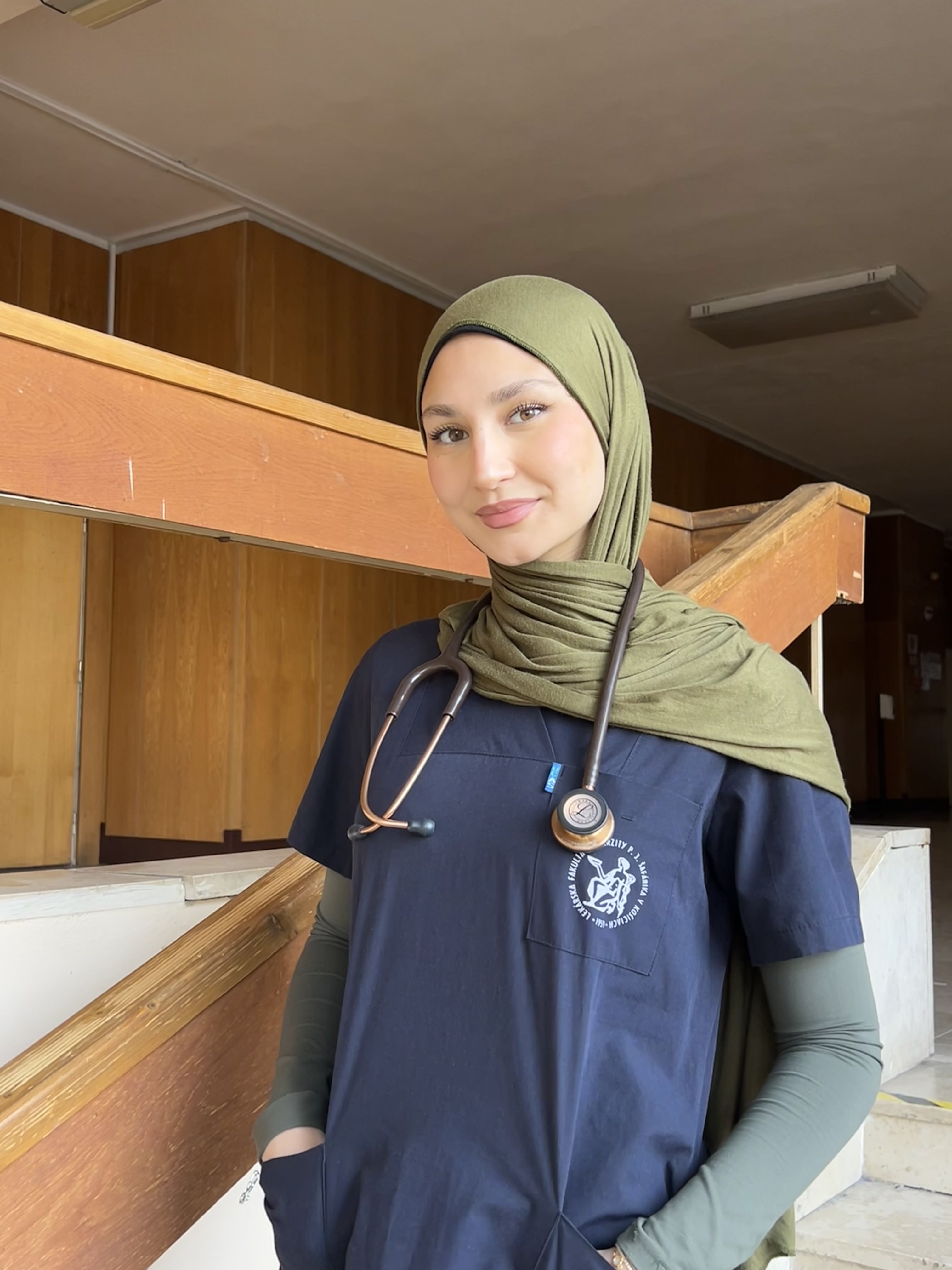
Studying medicine in Europe takes 6 years — a single Doctor of Medicine (MD/MUDr.) degree you enter straight after secondary school, taught fully in English at universities like UPJŠ Košice, UPOL Olomouc and UMCH Hamburg. There's no separate 3–4 year premed bachelor's like in the US. If you already hold a relevant bachelor's, some countries offer a 4-year graduate-entry route. After the 6 years you're a qualified doctor — then comes postgraduate/specialty training.
So you're staring down the medicine path in Europe and the one thing nobody gives you a straight answer on is: how many years to study medicine in Europe, really? I'll keep it simple, because I'm actually living it. I'm Shakhzoda, a med student at one of these European programmes, and the honest answer is six years. That's it. Six years, English-taught, entered directly from high school, and at the end you walk out a qualified doctor.
That's the number that surprises people from the UK, US and Canada — because back home the math is way longer and way more expensive. Let me break down what those six years actually look like, how they stack up against the UK and US routes, what the degree is called (MD vs MBBS vs MUDr. — spoiler, it's the same thing), and what happens after you graduate, because that's the part every ranking page conveniently forgets.
The European 6-year MD, entered straight after secondary school with no premed bachelor's, is the fast route: the UK takes 5 plus 2 Foundation years to a fully-registered doctor, and the US and Canada take 8 to 10 years of study before residency even begins.
How many years to study medicine in Europe? The 6-year MD, explained
The European standard is a 6-year integrated medical degree — around 360 ECTS credits, Bologna-compliant, no bachelor's-then-med-school detour. You apply straight out of secondary school, sit an entrance exam (usually biology and chemistry), and if you get in, you're on the doctor track from day one.
Why six years and not five or seven? There's an actual legal reason, not just tradition. EU Directive 2005/36/EC, Article 24 sets the floor: basic medical training must be at least five years and at least 5,500 hours of theoretical and practical training at (or supervised by) a university. Those provisions were later amended by Directive 2013/55/EU. To comfortably clear that bar — plus fit in a full clinical internship — nearly every EU country runs a 6-year programme. So when a page tells you "it's 6 years," that six is baked into EU law, not marketing.
Here's roughly how the six years split, at basically any English-taught EU med school:
- Years 1–3 (pre-clinical) — the theory grind: anatomy, biochemistry, physiology, histology, then pathology, pharmacology and microbiology. Lots of cadaver lab, lots of memorising. This is where people either fall in love or reconsider their life.
- Years 4–5 (clinical) — you move into the hospital. Rotations through internal medicine, surgery, paediatrics, OB/GYN, psychiatry, neurology — real patients, real wards.
- Year 6 (final/internship year) — the practical clinical year. You're essentially doing supervised clinical clerkships full-time, then you sit your state final exams and graduate.
By the end you've got your primary medical qualification. Not a bachelor's you have to top up — the actual, portable, EU-recognised degree to practise medicine.
Can you study medicine in Europe in 4 years? The graduate-entry route
Yes — if you already hold a relevant bachelor's degree. Graduate-entry (accelerated) medicine in Europe is typically a 4-year programme, though some universities run it as 5 years. The idea is that you've already covered a lot of the pre-clinical science, so you skip ahead and compress the theoretical phase.
Real talk though: the 6-year undergraduate MD is the main event, and it's what most international students actually enrol in — because most people applying are coming straight from high school and don't have a bio/chem degree already. If you've got a science bachelor's and want to shave two years, graduate-entry is worth asking about. If you're 18 and finishing secondary school, the standard 6-year track is your route.
Europe vs the UK: 6-year MD vs 5-year MBBS + Foundation
This is where "how long is medical school in Europe compared to the UK" gets interesting. On paper the UK MBBS looks shorter — 5 years for the degree (or 6 with an intercalated year). But the degree isn't the finish line in the UK. After graduating you enter the UK Foundation Programme — two more years (F1 and F2) — and you only become fully registered with the GMC after successfully completing F1.
So the real UK timeline to a fully-registered, independent doctor is closer to 5 + 2 = 7 years. Europe's 6-year MD gets you a qualified degree a year sooner, and getting a place is often far more accessible for international students than surviving the UCAT/BMAT gauntlet and the brutal UK cap on international seats.
Europe vs the US and Canada: why 6 years is actually the shortcut
Now the big one. In the US and Canada, "MD" is a postgraduate degree — you first need a 3–4 year bachelor's (premed), then take the MCAT, then start a 4-year medical school. That's why becoming a doctor there effectively takes 8 to 10 years of study before residency even begins.
In Europe, there's no premed bachelor's. The 6-year MD is entered directly after secondary school and folds the science foundation into the degree itself. Same destination, roughly 2–4 fewer years of tuition. Here's the clean side-by-side:
| Route | Degree length | Premed needed? |
|---|---|---|
| Europe (EU MD) | 6 years | No |
| UK (MBBS) | 5 years + 2 Foundation | No |
| US / Canada (MD) | 4 years med school | Yes (3–4 yr bachelor's) |
When people ask "how many years to study medicine in Europe" and then compare it to home, this is the aha moment: Europe isn't the slow route — for most international students it's the fast, cheaper one.
MD vs MBBS vs MUDr. — same 6-year degree, different name
Here's a thing that trips everyone up. You'll see "MD" at one school, "MBBS" (Bachelor of Medicine, Bachelor of Surgery) at another, "MUDr." at a third — and panic that they're different qualifications with different lengths. They're not. It's the same 6-year primary medical qualification, just labelled by local convention.
- MD (Doctor of Medicine) — the common European label for the 6-year degree. Note: this is not the same as the North American MD, which is a 4-year postgraduate degree.
- MBBS / MBChB — the UK, Ireland and Commonwealth (India, etc.) name for the exact same 6-year (5 in the UK) undergraduate medical degree.
- MUDr. — "doktor medicíny," the title used in Slovakia and the Czech Republic. At UPJŠ Košice, for example, graduates of the 6-year English General Medicine programme receive the title MUDr. Fully equivalent to MD/MBBS.
Different sticker, same 6-year primary qualification. Once you internalise that, the whole "which degree is better" noise disappears.
Country-by-country: it's basically 6 years everywhere in the EU
The beauty of the EU standard is how little the number moves. Whether you study in Slovakia, the Czech Republic, Poland, Hungary, Romania, Bulgaria, Italy, Cyprus, Germany, Georgia or Latvia, the English-taught undergraduate medicine track is 6 years. The 4-year figure only shows up for graduate-entry applicants who already have a bachelor's.
What does change country to country is the flavour — entrance-exam style, how early clinical exposure starts, hospital partnerships, and cost. A few concrete, real ones from Medently's partner universities:
The 4 partner universities at a glance
The English-taught medicine track is 6 years at each of them: what changes is the entrance exam, the cost and the country.
Košice, Slovakia: the 6-year MUDr.
- General Medicine in English, 6 years and 12 semesters
- Graduates receive the MUDr. title
- English programme running since 1992, students from over 40 countries
- Tuition around €13,000 per year

Olomouc, Czech Republic: 6-year General Medicine
- 6-year General Medicine at Palacký University
- Accredited in the US and Canada
- AMSE accreditation awarded in 2019
- Tuition roughly €12,500 per year

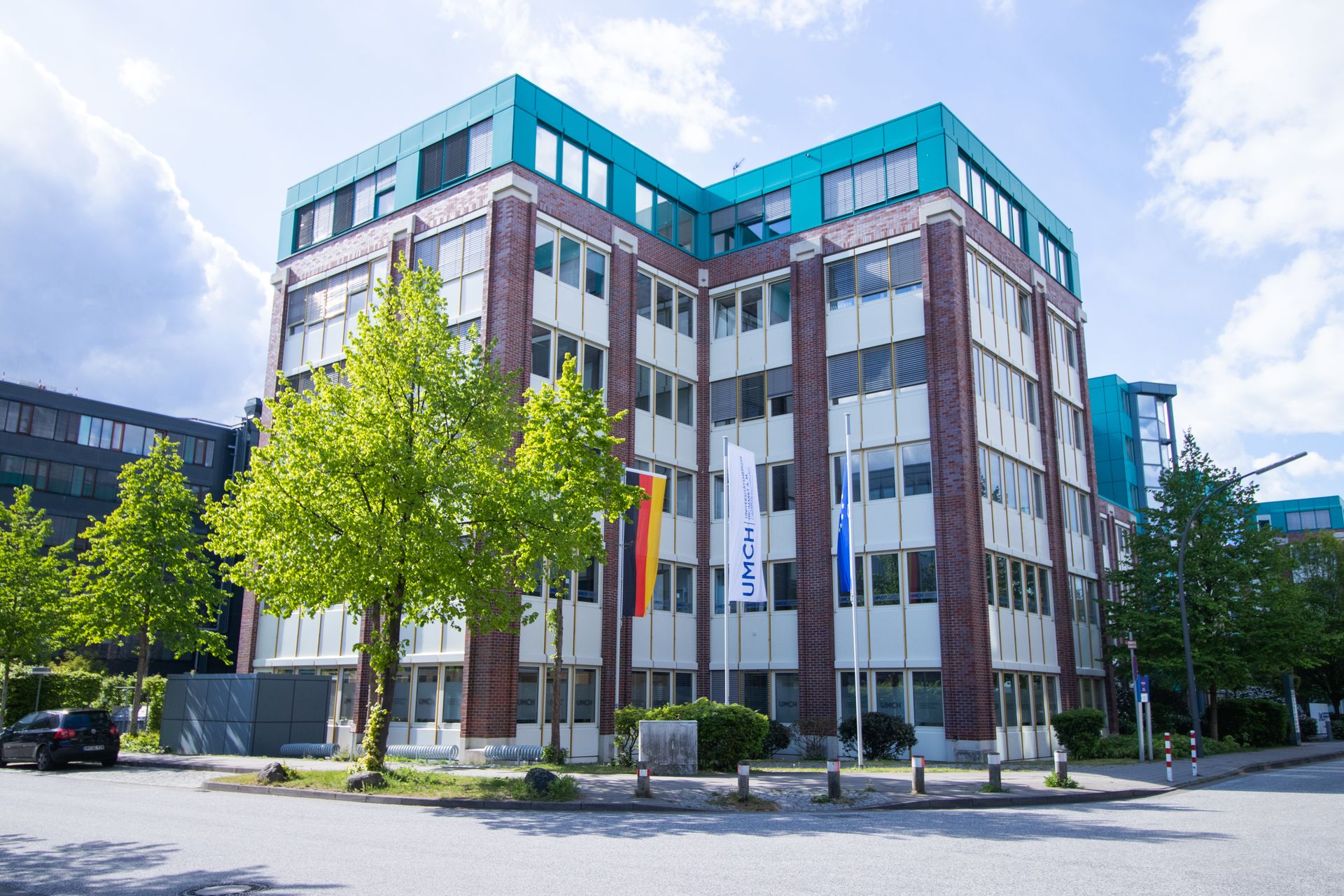
Hamburg, Germany: 6 years, 360 ECTS
- Two pre-clinical years plus four clinical years
- Taught in English with clinical training at German partner hospitals
- Totals 360 ECTS
- Medicine only, no dentistry
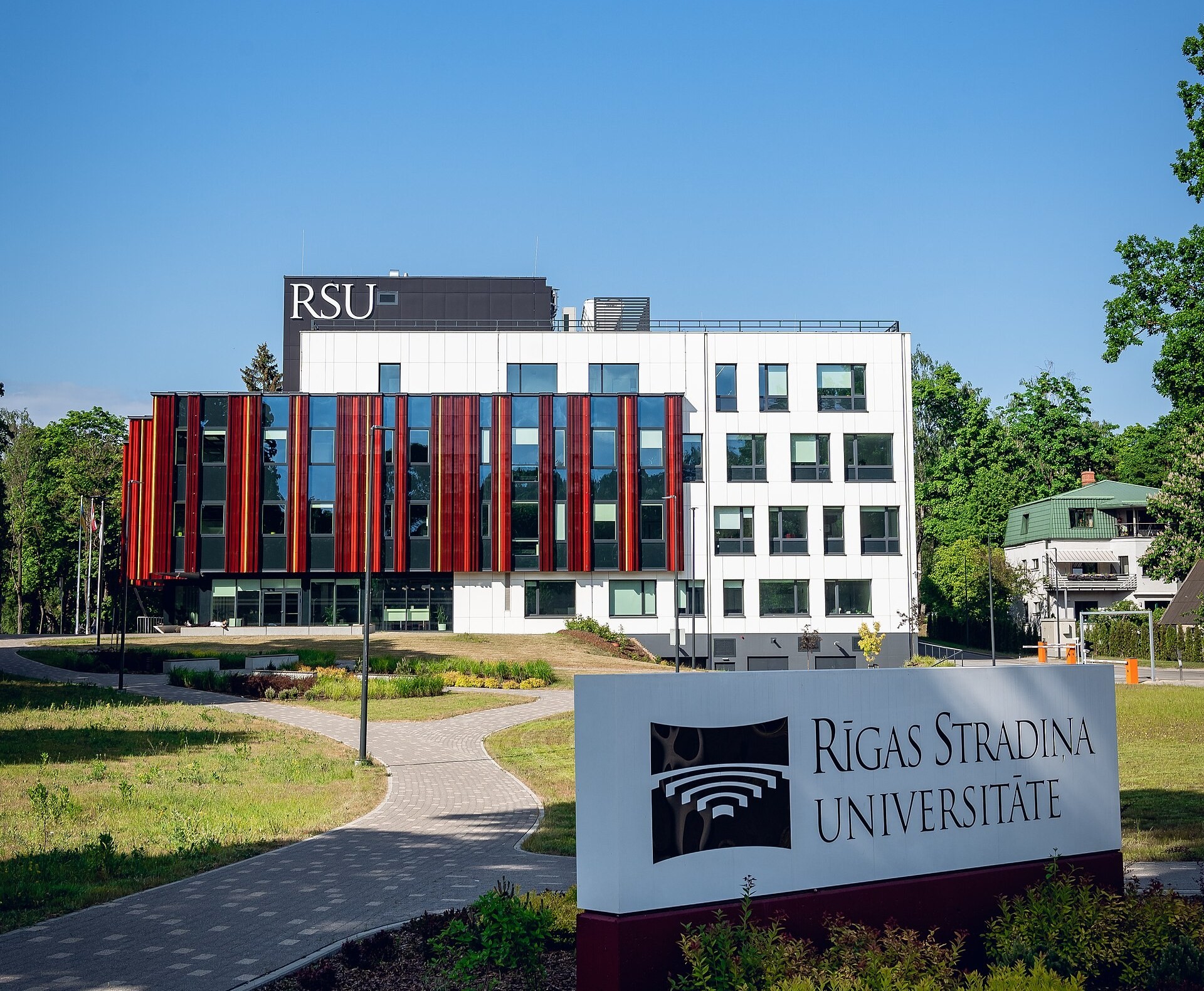
Riga, Latvia: no entrance exam at all
- 6-year English-taught Medicine programme
- 5-year Dentistry programme
- Medicine €13,500 and Dentistry €15,500 a year
- Admission decided on your school grades in sciences like biology and chemistry
- UPJŠ Košice (Slovakia) — General Medicine in English runs 6 years / 12 semesters, graduates get the MUDr. title. It's been running its English-language, Europe-wide recognised programme since 1992, with students from over 40 countries. Tuition is around €13,000/year. More on UPJŠ here.
- UPOL Olomouc (Czech Republic) — a 6-year General Medicine programme at Palacký University, accredited in the US and Canada, and awarded AMSE (Association of Medical Schools in Europe) accreditation in 2019. Tuition roughly €12,500/year. Details on UPOL here.
- UMCH Hamburg (Germany) — the UMFST–UMCH human-medicine programme is 6 years — two pre-clinical years plus four clinical years — totalling 360 ECTS, taught in English with clinical training at German partner hospitals. Note: UMCH is medicine only, no dentistry. More on UMCH here.
- RSU Riga (Latvia) — Rīga Stradiņš University runs a 6-year English-taught Medicine programme and a 5-year Dentistry programme, at €13,500 and €15,500 a year. It is the one partner with no entrance exam at all — admission is decided on your school grades in sciences like biology and chemistry. More on RSU here.
Quick reality check on tuition over the full degree: at roughly €12,500–€13,000 a year × 6 years, you're looking at a total programme cost in the ballpark of €75,000–€78,000 — with zero agency fees if you apply through Medently, because we're a free consultancy. Want the full cost picture? I'd read our cheapest English-taught medical schools in Europe breakdown next.
Is a European medical degree recognised? (Yes — here's the legal basis)
Six years only means something if the degree travels. It does. Under EU Directive 2005/36/EC (as amended by 2013/55/EU), a medical qualification listed in Annex V is recognised across the EU/EEA. That's the mechanism that lets a UPJŠ or UPOL graduate get licensed to practise throughout the EU. In Norway, for instance, you get your autorisasjon through Helsedirektoratet under the same directive.
For global portability: the partner universities are listed in the World Directory of Medical Schools (WDOMS), which matters if you ever want the US route — to practise there, your school must be WDOMS-listed with an ECFMG Sponsor Note and accredited by a WFME-recognised agency before you apply for ECFMG Certification (then the USMLE). The WHO/WFME framework is the backbone here.
What happens after the 6-year medicine degree? The real licensing timeline
This is the part almost every competitor page skips — and it's the part that actually matters. Finishing the 6 years makes you a qualified doctor, but "licensed to practise independently" is a separate step that depends on where you go.
EU / EEA (including Norway)
Your Annex-V qualification is recognised, so registration is generally straightforward — in Germany you obtain the Approbation (the licence to practise). Heads up on Germany specifically: to get the Approbation you must show B2 general and C1 medical-terminology German, even though your degree was taught in English. In Norway it's autorisasjon via Helsedirektoratet.
United Kingdom (not automatic post-Brexit)
Since Brexit, EEA qualifications no longer get automatic recognition in the UK. How you register with the GMC now depends on where you earned your primary medical qualification, not your nationality. The good news: if your degree is a "relevant European qualification" on the GMC's Relevant European Qualifications List — which includes accepted Slovak and Czech qualifications (the Czech one being the "Diplom … doktor medicíny, MUDr.") — the GMC accepts it as evidence of your knowledge and skills, so you're not required to sit the PLAB test.
Important 2024 update most pages miss: even with a relevant European qualification, from 2024 graduates must pass the UKMLA (UK Medical Licensing Assessment) before full GMC registration. After that you enter the two-year Foundation Programme (F1/F2), with full registration after F1. (Note: dentists are a different track — they register with the GDC, assessed case-by-case.)
United States
WDOMS-listed school → ECFMG Certification → the USMLE steps → residency match. Longer road, but the 6-year European degree is a valid starting point when the school is properly listed.
So the honest "time to a practising doctor" math: 6 years of study + your postgraduate/specialty training (residency length varies by specialty and country). Six years is the degree; the practising-doctor journey is 6 + specialty on top — still shorter overall than the US 8–10-years-before-residency setup. For the full year-by-year application side of this, our 2026/2027 application timeline maps it out.
The same six-year structure applies at the two newest universities we work with: NCU in Bydgoszcz, Poland and the University of Nicosia in Cyprus both run six-year English-taught medicine programmes with EU-recognised degrees.
Is studying medicine in Europe worth it?
From where I'm sitting — as someone actually in one of these programmes — yeah, for a lot of internationals it genuinely is. You get an EU/EEA-recognised MD in six years, in English, straight from high school, for a fraction of US tuition and with a friendlier admissions path than the UK. Medently's whole thing is that founder Saif is himself a medical student, and co-founder Dr. Dylan is a working doctor — so the guidance comes from people who've walked it. And it's a free consultancy, no agency fees, into partner universities in Slovakia, Czechia and Germany. If you want the shortlist of English-taught options, our top medical universities in Europe taught in English guide is the place to start.
FAQ
How many years does it take to study medicine in Europe?
Six years for the standard undergraduate MD, entered directly after secondary school and taught in English — no separate premed bachelor's required. Graduate-entry (for those who already hold a relevant bachelor's) is typically 4 years.
Is medicine 6 years or 5 years in Europe?
The full undergraduate degree is 6 years across virtually all EU countries. EU Directive 2005/36/EC only requires a minimum of 5 years / 5,500 hours, so 6 years is the practical standard that clears that legal floor with a full clinical internship year included.
Do you need to take PLAB or the UKMLA after a European medical degree?
If your degree is a GMC "relevant European qualification" (which includes accepted Slovak and Czech qualifications), you don't sit PLAB. However, from 2024 you must pass the UKMLA before full GMC registration, then complete the Foundation Programme (F1/F2). Registration is assessed by where you got your degree, not your nationality.
What is the difference between MD and MBBS in Europe?
None in substance — MD, MBBS/MBChB and MUDr. (used in Slovakia and Czechia) are all names for the same 6-year primary medical qualification taken straight after secondary school. The European MD is the direct equivalent of the UK/India MBBS, and is different from the 4-year postgraduate MD used in the US/Canada.
Every Medently student gets free document handling, entrance-exam flashcards where there is an exam, and direct chat with current students at UPJŠ, UPOL, UMCH and RSU. No fees, no hidden costs.
Ready to apply to medicine or dentistry in Europe?
Talk to active students. 100% free advisory from Medently.
