If you are finishing school now, the shortest realistic route is a six-year medical degree in Europe, entered directly after secondary school. No bachelor's degree first, no UCAT. You graduate as a doctor at roughly 24 or 25. The UK standard route is five years but you need top A-levels plus the UCAT to get on it. The US route runs four years of college plus four years of medical school before residency even starts, which is why it is the slowest mainstream path. You can check which six-year programmes you could get into with our Can I Get In tool.
People usually ask this question for one of two reasons. Either they want to know if there is a shortcut, or they have just realised the route they assumed was normal is going to eat a decade of their life. Both are fair. Let's do the honest version, with real numbers.
The comparison, one row at a time
| Route | Years to degree | Entry requirement |
|---|---|---|
| EU six-year MD (MUDr.) | 6 | School leaving certificate plus entrance exam |
| UK standard entry | 5 | A-levels plus UCAT plus interview |
| UK graduate entry | 4 | A prior degree first, so 7 in total |
| US route | 8 | Bachelor's degree, MCAT, then medical school |
Look at the graduate entry row again, because this is where most "become a doctor in four years" claims fall apart. Four years is real, but only after you have already spent three or four years on a bachelor's degree. Starting from school, that is the slower path, not the faster one.
Counted from school, the six-year European degree is the fastest route to becoming a doctor: four-year graduate entry is only faster if you already hold a prior degree.
Why Europe is fastest from school
The structural reason is simple. In Europe, medicine is an undergraduate degree. You go straight in at eighteen or nineteen. There is no premed stage, no separate application cycle after a first degree, no MCAT.
The second reason is how you get in. Instead of A*AA offers and admissions tests built to filter thousands of applicants, most European medical schools use a written entrance exam in biology and chemistry. It is a subject test, not an aptitude ranking. You can prepare for it in weeks, and if you know the material you pass.
The three six-year programmes at a glance
These are the three English-taught, six-year programmes from this guide, side by side.
Košice, Slovakia: six-year General Medicine in English
- Six-year General Medicine taught in English, awarding the MUDr. degree
- The university states the MUDr. is equivalent to an M.D. and recognised across the EU
- Entrance exam: 200 multiple-choice questions, 100 biology and 100 chemistry, in one 2.5-hour sitting
- EUR 13,000 per year for 2026/2027, fixed at enrolment
- Sitting in Košice on 12 August 2026, practise the exam free

Olomouc, Czech Republic: six-year medicine at EUR 12,500 per year
- Six-year General Medicine programme
- Tuition EUR 12,500 per year
- Entrance test covers biology, chemistry and physics or mathematics
- Holds accreditation from the Association of Medical Schools in Europe
- Online exam sittings run into early August

Hamburg, Germany: six-year medicine on a German campus
- Six-year, 360-ECTS medical programme taught in English
- Degree awarded by G.E. Palade University of Târgu Mureș
- Listed in the World Directory of Medical Schools
- Holds H+ status on Germany's anabin database
- UPJŠ Košice, Slovakia: six-year General Medicine in English, awarding the MUDr. degree, which the university states is equivalent to an M.D. and recognised across the EU. Entrance exam is 200 multiple-choice questions, 100 biology and 100 chemistry, in one 2.5-hour sitting.
- Palacký University Olomouc, Czech Republic: six-year General Medicine at EUR 12,500 per year, with an entrance test covering biology, chemistry and physics or mathematics. The programme holds accreditation from the Association of Medical Schools in Europe.
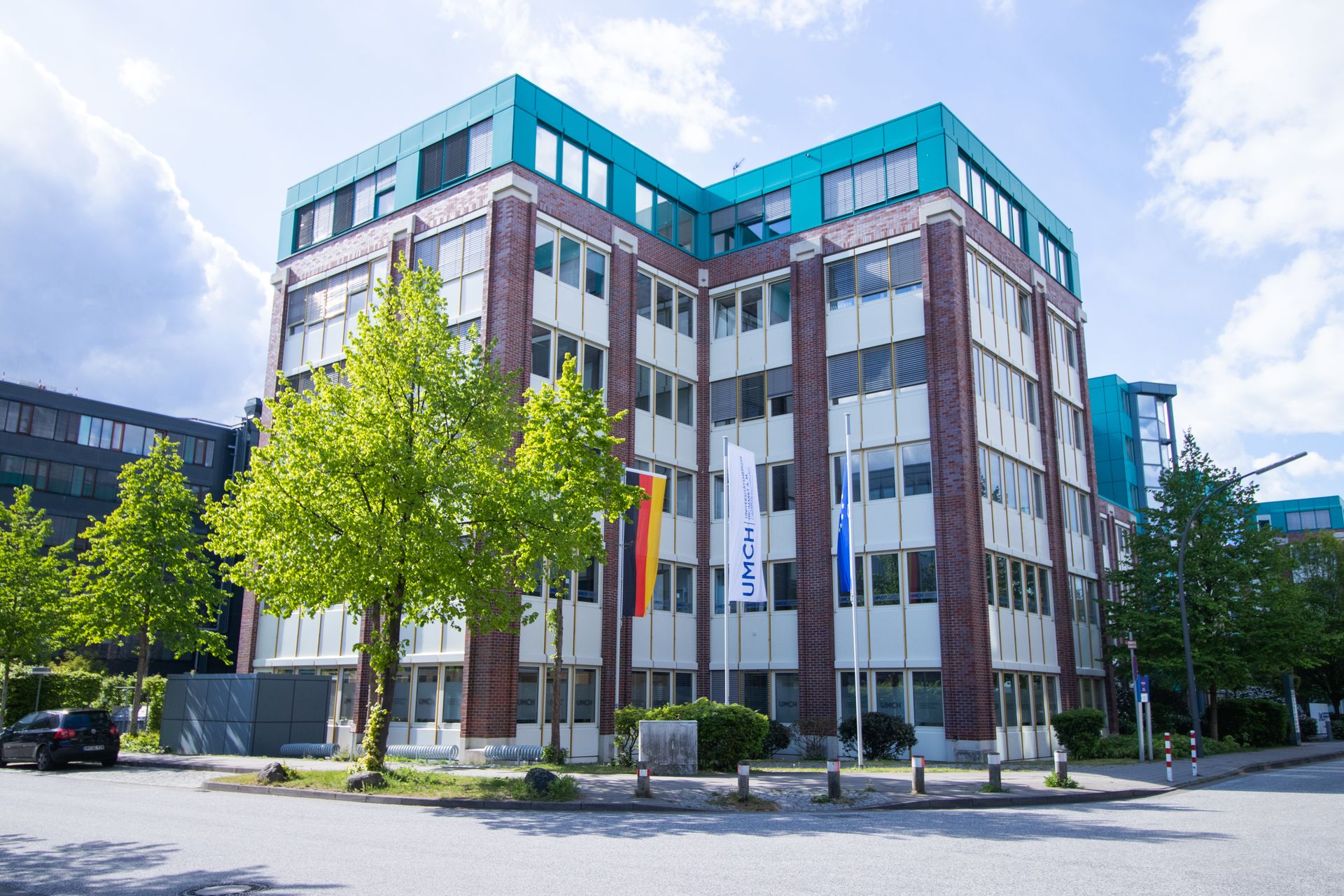
- UMCH Hamburg: a six-year, 360-ECTS medical programme taught in English on a German campus, with the degree awarded by G.E. Palade University of Târgu Mureș. It sits in the World Directory of Medical Schools and holds H+ status on Germany's anabin database.
Degree versus licence, which is the real question
Here is the distinction almost nobody online makes properly, and it matters more than the headline number.
You are a doctor, academically, the day you graduate with your MD or MUDr. You can practise independently only after whatever supervised stage your country requires. In the UK that is the two-year foundation programme, with full GMC registration available after completing the first foundation year. In Norway it is LIS1. In the US it is a residency of three to eight years depending on specialty.
So when someone says "eleven to sixteen years", they are describing the American total including residency, which the AAMC itself puts at four years of college plus four of medical school plus three to eight of residency. Comparing that to a European six-year degree is comparing two different finish lines.
Does a European degree actually let you practise?
Within the EU and EEA, yes, and this is written into law. Article 24(2) of Directive 2005/36/EC requires basic medical training to comprise at least five years of study and at least 5,500 hours of theoretical and practical training under university supervision. Degrees that meet it get automatic recognition across member states.
For the UK, the GMC treats medical qualifications awarded in the EEA or Switzerland as potential "relevant European qualifications", which are handled through a dedicated registration route rather than the standard overseas PLAB route. Rules here have been reviewed periodically since Brexit, so check the current GMC guidance for your graduation year rather than trusting a blog post, including this one.
For the US, what matters is that your medical school is listed in the World Directory of Medical Schools, which is the gateway to sitting the USMLE.
What about "four-year medicine in Europe"?
It exists, and it is genuinely useful for the right person. Some European schools admit students with a relevant science degree into a later year, and the UK and Cyprus run four-year graduate entry programmes.
The catch is the same everywhere. You need the prior degree. If you already have one, this is the fastest option available to you and worth looking at seriously. If you are eighteen and choosing now, going straight into a six-year programme gets you qualified years earlier.
Cost, since "fastest" usually also means "cheapest"
Speed and money tend to move together here, because every extra year is another year of fees and another year not earning.
European tuition for English-taught medicine generally runs in the low-to-mid five figures per year. UPJŠ lists General Medicine at EUR 13,000 per year for 2026/2027, and UPOL lists EUR 12,500. One detail worth knowing: at our partner universities the fee is fixed at enrolment and does not rise year on year during your degree, so a per-year figure times six is a straightforward multiplication.
The timing bit people get wrong
UCAS runs one cycle a year, and missing it costs you twelve months. European entrance exams do not work that way. Sittings run through the summer, and you can usually register about a week before a sitting. UPJŠ has a sitting in Košice on 12 August 2026. UPOL runs online sittings into early August.
Practically, that means deciding in July does not cost you the year. It is a genuinely different rhythm from what UK applicants are used to.
FAQ
What is the shortest time to become a doctor?
From school, six years to the degree via a European medical programme, then whatever supervised training your country requires before independent practice. If you already hold a science degree, a four-year graduate entry programme is shorter from where you stand today.
Can I become a doctor in four years in Europe?
Only with a prior degree, through graduate or advanced entry. Counting from school, that route totals seven or more years, so it is slower overall than going straight into a six-year programme.
How long is medical school in Europe compared to the US?
Six years in Europe entered straight from school, versus four years of college plus four years of medical school in the US. That is a two-year head start before residency is even in the picture.
Can I get into a European medical school without the UCAT or specific A-levels?
Generally yes. Entry is based on a biology and chemistry entrance exam rather than the UCAT, and requirements are set by each university. We help students prepare for and register for these exams free of charge.
Do European medical degrees count in the UK?
EEA medical qualifications are handled by the GMC as relevant European qualifications through a dedicated registration route. Because post-Brexit arrangements are reviewed periodically, confirm the current requirements with the GMC for your graduation year.
For completeness: the two newest universities we work with fit the same six-year pattern — NCU in Bydgoszcz starts on 1 October after autumn entrance exams, and the University of Nicosia admits on a rolling basis with no entrance exam.
Sources
- Directive 2005/36/EC, Article 24(2): minimum five years and 5,500 hours of basic medical training.
- AAMC, The Road to Becoming a Doctor: four years college, four years medical school, three to eight years residency.
- NHS Health Careers: UK five-year standard entry, four-year graduate entry, and the two-year foundation programme.
- GMC: full registration for doctors holding a relevant European qualification.
- UPJŠ, UPOL and UMCH official pages: programme length, degree titles, entrance exams and tuition.
Every Medently student gets free document handling, entrance-exam flashcards where there is an exam, and direct chat with current students at UPJŠ, UPOL, UMCH and RSU. No fees, no hidden costs.
Ready to apply to medicine or dentistry in Europe?
Talk to active students. 100% free advisory from Medently.
