Country guide · Dentistry in Slovakia

Study dentistryin Slovakia

A 5-year MDDr. taught in English at Pavol Jozef Šafárik University in Košice, decided by one Biology and Chemistry exam — no physics, no interview, no IELTS. €13,500 a year, fixed for the whole degree. Our help is free.

green and brown mountain under white clouds during daytime
A modern dental surgery with the chair and equipment ready
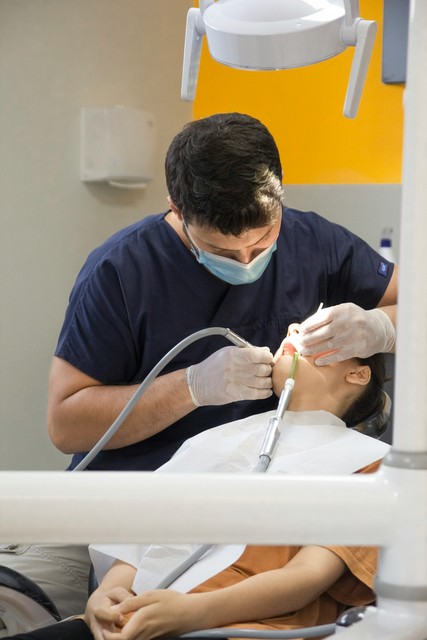
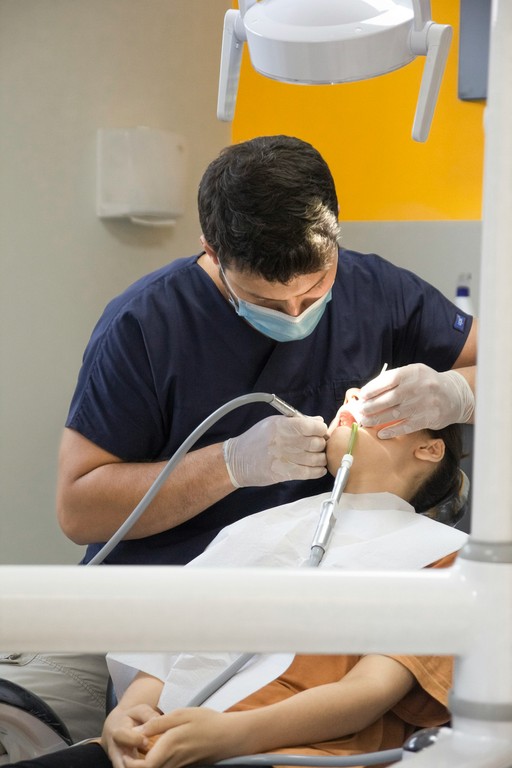
A dentist working on a patient
Empty town square with historic buildings at dusk
A young woman having her teeth checked by a dentist
a couple of people walking across a lush green hillside
Why students choose it

The short version

5
years to qualify — a full year less than medicine
2
subjects in the exam. Biology and Chemistry, nothing else
€0
what we charge you, ever
The university we work with

Pavol Jozef Šafárik University, Košice

UPJŠ is a public university, and it is our oldest partnership — Medently's founder studies there. Its Faculty of Medicine teaches a 5-year MDDr. in Dental Medicine entirely in English, alongside the far larger General Medicine programme.

  • Five years, not sixUPJŠ moved its English dental programme from six years to five from the 2025/26 intake, bringing it in line with Poland and Czechia. You qualify a year earlier than the medics you started with.
  • Two subjects, and that is allBiology and Chemistry. No physics, no maths, no interview, no IELTS. Two hundred questions, 800 points, two and a half hours — and we give you the official question bank free.
  • Your fee is fixed€13,500 a year, and once you enrol that rate is locked for the whole degree. It changes between cohorts, never mid-course.
  • ⚠️ Far fewer seats than medicineMedicine has 210 English-taught places. Dentistry has a small fraction of that, and the pass bar sits higher because of it. Talk to us before you build a plan around one exam date.
A dental student treating a patient in the university clinic
a black and white photo of a bridge over a river
Six reasons

Why this is worth six years of your life

A modern dental surgery with the chair and equipment ready
The reason most people come

Two subjects decide it

Biology and Chemistry, multiple choice, in person in Košice. No physics, no maths, no interview, no UCAT and no English certificate. One exam you can genuinely prepare for — and we hand you the official question sets, free.

A dental model of teeth used for training
Time

Qualified in five years

The MDDr. runs five years, so you are licensed a year before the medicine cohort you arrived with. In a profession where you can open your own practice, that year is worth real money.

clear drinking glass with brown liquid on brown wooden table
Money

€13,500, fixed

UK international dental schools charge £30,000–50,000 a year, when a place exists at all. UPJŠ charges €13,500 and does not raise it under you. Košice living costs are among the lowest in the EU.

a couple of people walking across a lush green hillside
Weekends

The High Tatras

Alpine hiking, skiing, mountain lakes and the Slovak Paradise gorges, all within weekend reach. Nobody puts it in the brochure and everybody talks about it afterwards.

A dental student in scrubs holding the suction line
The teaching

Chairs, not just lecture halls

Pre-clinical work on phantom heads moves into supervised treatment at the university's own dental clinics. Small year groups are the upside of a programme with few places.

a black and white photo of a bridge over a river
Day to day

A city you can actually manage

Home, faculty, clinic, gym and the old town inside a small daily radius, and a discounted transport pass at €15 a month — the cheapest of any country we work in.

Not sure your grades are enough?
Send them over and we will tell you honestly, in a day or two — before you spend anything.
A dental chair in a bright treatment room
5 years
The full MDDr. in Dental Medicine, taught in English — a year shorter than the medicine degree beside it.
The programme

What five years of dentistry actually looks like

Dentistry is not a shorter medicine degree, and students who arrive expecting that struggle. The first two years are the same science backbone — anatomy, histology, physiology, biochemistry — but you carry a manual skills track alongside it from the start, in the simulation lab, on plastic teeth and phantom heads.

Years three to five move you onto real patients under supervision in the university's dental clinics: conservative dentistry and endodontics, prosthetics, periodontology, oral surgery, paediatric dentistry and orthodontics. By the end you have a treatment log, not just a transcript.

The honest part: your hands are examined, not only your memory. Nobody arrives good at this, and it is learned rather than innate, but it is a genuinely different kind of pressure from a medicine degree — and it is the thing to weigh up before you commit five years.

You graduate MDDr. — a dentist, licensed to treat, not a doctor who later chooses a specialty. That decision is made on the day you apply.
A dental student gloving up before a clinic session
A dental model of teeth used for training
A dental chair in a bright treatment room
The honest comparison

Dentistry or medicine? Read this before you choose

Both programmes at UPJŠ are taught in English, sit the same entrance exam and lead to an EU-recognised degree. Everything that actually differs is in this table.

Length
Dentistry 5 years, medicine 6. Same start date, one year apart at the end.
The degree
Dentistry gives you the MDDr., medicine the MUDr. They are separate professions with separate regulators — GDC for dentists in the UK, GMC for doctors. Never treat them as interchangeable.
How hard is it to get in
The exam is identical, but dentistry has a small fraction of medicine's 210 places, so the mark that gets you in is higher. Recent years have needed roughly 620 of 800 — treat that as a guide, not a promise.
Can you switch later
Not casually. This is not a first-year choice you correct in second year — the two curricula split from the beginning. Choose on the application, not afterwards.
Cost
€13,500 a year for dentistry against €13,000 for medicine — but five years rather than six, so the whole degree costs less overall.
Not sure yet? Send us your grades and tell us what you actually want to do all day. We will say honestly which one we would put you forward for.
A dental examination with mirror and probe
Medical staff attending to patients in hospital beds.
Living there

Košice, and what it costs a dental student

UPJŠ runs dormitories at Medická 4 and 6 and Popradská 66 and 76, with international students directed to Popradská 76. ⚠️ Very low headline dorm prices circulate online and attach to other buildings and other student categories — treat €70–150 a month as a planning figure and ask us for the current tariff. A room in a shared flat runs €250–400, a studio €450–650.

Realistic monthly totals: €500–700 frugally, €700–950 sharing a flat, €1,000–1,350 with your own studio and a social life. The discounted 30-day transport pass is €15, the cheapest anywhere we work, and Košice is small enough that most students walk to the faculty anyway.

One cost that is specific to dentistry: you will buy your own instrument kit and loupes, and there are consumables through the clinical years. It is not enormous next to tuition, but it is real and nobody mentions it — budget for it in year one rather than being surprised.

⚠️ Košice has no direct flight to Oslo. London Stansted and Luton, Dublin, Liverpool, Vienna, Warsaw, Prague and Rome are direct; Norwegians connect through Warsaw, Vienna or Prague.
a living room filled with furniture and a flat screen tv
black concrete road during daytime
a plate of food
Afterwards

Where an MDDr. from Košice lets you practise

Dentistry is one of the professions with automatic recognition inside the EU and EEA under Directive 2005/36/EC. That is the whole reason this route works: Slovakia is an EU member state, and the MDDr. is on the list of qualifications other member states must recognise.

What that means in practice depends on where you want to work, so here it is by destination — with the caveat that regulators change their rules and we check yours with you before you commit.

Norway
Apply to Helsedirektoratet for autorisasjon as a tannlege. EU/EEA dental qualifications go through the recognition route rather than a re-sit of the degree; language documentation is part of it.
United Kingdom
Registration is with the General Dental Council, not the GMC. ⚠️ Post-Brexit the automatic EU route no longer applies to UK registration the way it once did, so check the GDC's current requirements for an EEA-qualified dentist before you plan around it — we will go through them with you.
The EU and EEA
Automatic recognition under Directive 2005/36/EC, which is the same framework our medicine graduates use. Individual countries still ask for local language proficiency.
Elsewhere
Outside Europe you are into national licensing exams — the US, Canada and Australia each run their own. Perfectly doable, but plan it from year three, not from graduation.
A dentist examining a patient with an intraoral scanner
A dentist working on a patient
a couple of people walking across a lush green hillside
€15
The discounted 30-day transport pass in Košice — the cheapest of any country we work in.
See it for yourself

Košice from the air

a black and white photo of a bridge over a river
Admission

What you actually need, by where you're from

One exam, sat in person in Košice. Biology and Chemistry only — and because dentistry has far fewer places than medicine, the mark you need is higher. Medently prepares you with the official question bank, free.

The exam
200 multiple-choice questions — 100 Biology, 100 Chemistry — worth 800 points over two and a half hours, in person. Up to four options per question can be correct, which is why the official practice set matters. Exam fee €30.
The bar for dentistry
Higher than for medicine, because the places are far fewer. Recent intakes have needed roughly 620 of 800. ⚠️ Treat that as a guide rather than a published cut-off — it moves with the field each year.
🇳🇴 Norwegian students
A vitnemål with generell studiekompetanse. No realfag required — the exam is the entire assessment, and we give you the official 600-question Biology and Chemistry sets to prepare with.
🇬🇧 UK students
A-Levels or equivalent completing 12 years of schooling. Your subject combination does not gate you here; the exam does. No UCAT.
🌍 International students
Any 12-year school-leaving qualification. Documents need translation and, for some nationalities, apostille — we handle that with you.
No interview, no English test
Unlike UPOL there is no motivational interview, and no IELTS or TOEFL certificate is required in advance.
A dental examination with mirror and probe
We do the paperwork with you, free
Transcripts, translations, the English certificate and the interview practice — all of it, at no cost to you.
The details

Everything on one line

Degree
Dental Medicine (MDDr.)
Duration
5 years
Language
100% English
Entrance exam
200 MCQ, Bio + Chem
Recent pass guide
≈ 620 / 800
Tuition
€13,500 / year, fixed
Exam fee
€30
Living costs
≈ €700–950 / month
Interview?
None
English certificate?
Not required
Intake
September
Nearest hubs
Vienna · Warsaw · Prague
All three side by side

The three places you can study dentistry in English

No university will ever publish this table, because it points at cheaper competitors. We will — it is the honest way to choose.

CountryUniversityEntrance examTuition / yearPlaces a yearGetting to Oslo
🇸🇰 SlovakiaYou are hereUPJŠ KošiceBiology + Chemistry only€13,500Far fewer than medicine — ask usVia Warsaw or Vienna
🇨🇿 CzechiaPalacký OlomoucOnline, instant result€14,000About 15–20 a yearVia Prague, 2h15 by train
🇱🇻 LatviaRSU RigaNone — grades decide€15,50032 per intake, twice a yearDirect, 1h30
SlovakiaYou are here
UPJŠ Košice
Entrance exam
Biology + Chemistry only
Tuition / year
€13,500
Places a year
Far fewer than medicine — ask us
Getting to Oslo
Via Warsaw or Vienna
Czechia
Palacký Olomouc
Entrance exam
Online, instant result
Tuition / year
€14,000
Places a year
About 15–20 a year
Getting to Oslo
Via Prague, 2h15 by train
Latvia
RSU Riga
Entrance exam
None — grades decide
Tuition / year
€15,500
Places a year
32 per intake, twice a year
Getting to Oslo
Direct, 1h30

These are the only three universities we work with that teach dentistry in English: UMCH Hamburg has no dental school, and our agreements with NCU Bydgoszcz and UNIC Nicosia cover medicine only. Tuition is the published annual rate for students starting in 2026/27 and we confirm your exact figure in writing before you commit.

Questions

The things people actually ask us

Can I study dentistry in Slovakia in English?
Yes. Pavol Jozef Šafárik University in Košice teaches a 5-year Dental Medicine programme leading to the MDDr. degree entirely in English. It is one of only three universities we work with that teaches dentistry in English — the others are Palacký University in Olomouc and Rīga Stradiņš University in Riga.
How long is dentistry at UPJŠ?
Five years. UPJŠ moved its English-taught Dental Medicine programme from six years to five from the 2025/26 intake, aligning it with Poland and Czechia. You qualify a full year before the medicine students who started alongside you.
What is the entrance exam for dentistry in Slovakia?
The same exam as medicine: 200 multiple-choice questions, 100 Biology and 100 Chemistry, worth 800 points across two and a half hours, taken in person in Košice. There is no physics, no maths, no interview and no English certificate. The fee is €30, and we give every student the official question sets to prepare with, free.
What score do I need for dentistry rather than medicine?
Higher than for medicine, because dentistry has a small fraction of medicine's 210 English-taught places. Recent intakes have needed roughly 620 out of 800. Treat that as a guide rather than a published cut-off — the bar moves with the strength of the field each year.
How much does dentistry cost at UPJŠ?
€13,500 a year, and the rate is fixed for the whole degree once you enrol — it changes between cohorts, never mid-course. Over five years that is less in total than the six-year medicine programme beside it. Living in Košice runs about €700–950 a month sharing a flat.
Do I need science subjects or IELTS?
Neither. UPJŠ does not require realfag or A-Level sciences, and no English certificate is needed. The entrance exam is the whole assessment, which makes this one of the most open routes into dentistry for students whose school subject choices closed doors elsewhere.
Is the MDDr. recognised in Norway and the UK?
Slovakia is an EU member state and dentistry has automatic recognition under EU Directive 2005/36/EC, which is the route Norwegian graduates use to apply to Helsedirektoratet for autorisasjon as a tannlege. UK registration is with the General Dental Council rather than the GMC, and its requirements for EEA-qualified dentists changed after Brexit — we go through the current rules with you rather than promising you a route.
Can I switch from dentistry to medicine once I'm there?
Not casually. The two curricula separate from the first year, so this is a decision you make on the application rather than one you correct later. If you are genuinely torn, tell us before you apply and we will talk it through properly.
Is there a direct flight from Oslo to Košice?
No. Košice flies direct to London Stansted and Luton, Dublin, Liverpool, Vienna, Warsaw, Prague and Rome, which is excellent for British and Irish students. Norwegian students connect through Warsaw, Vienna or Prague.
What does Medently charge?
Nothing, ever. We are paid by the universities, not by you — so the exam preparation, the document work, the translations and the application itself cost you nothing on top of the university's own fees.
yellow and black tram on road during night time
A dental model of teeth used for training
Empty town square with historic buildings at dusk
A dental student in scrubs holding the suction line
clear drinking glass with brown liquid on brown wooden table
A dental chair in a bright treatment room
fruit stand on the street during daytime
A dentist examining a patient with an intraoral scanner
black concrete road during daytime
A dental student gloving up before a clinic session

Two subjects decide whether you become a dentist

Biology and Chemistry, one exam, five years. Send us your grades and we will tell you honestly where you stand — free, before you spend anything.

Medently
© 2026 Medently Malook and Medently Mussarat. All rights reserved.