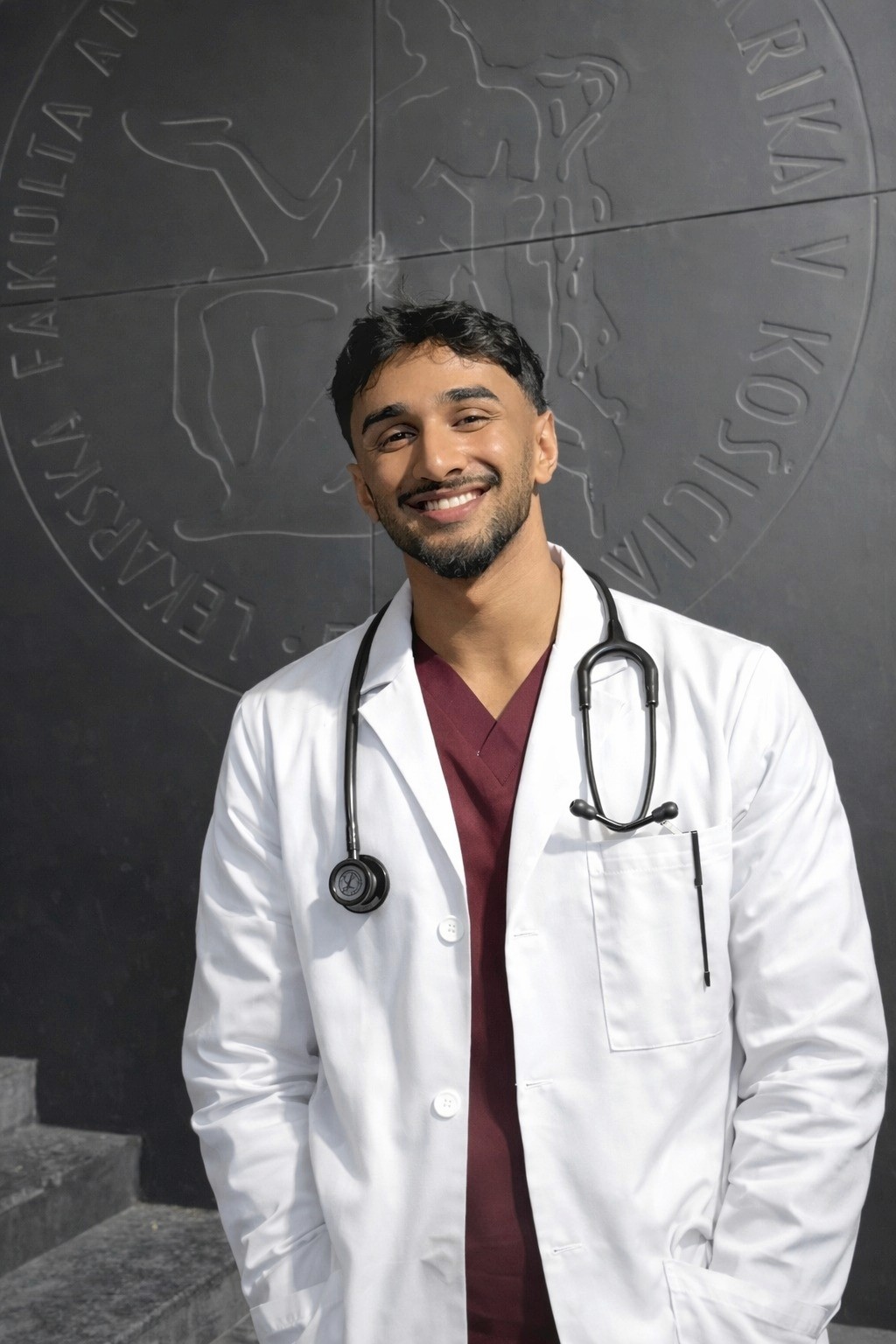
Yes — you can study medicine in Europe without biology and chemistry A-levels. Several English-taught European schools, including UPJŠ Košice, only ask for three A-levels in any subjects. You sit a biology and chemistry entrance exam after you apply — and that exam is something you can prepare for from scratch, with free flashcards and a mock exam.
So you didn't take Biology and Chemistry A-level. Maybe you did Maths, Economics and History. Maybe you realised you wanted medicine a year too late, after you'd already locked in the "wrong" subjects. And now every UK medical school website reads like a bouncer with a clipboard: Chemistry required, Biology required or strongly preferred, no exceptions. Feels like the door's shut, right?
It isn't. You can study medicine in Europe without biology and chemistry A-levels — full stop. I know because I'm a medical student myself, and the entry route at UPJŠ Košice in Slovakia genuinely doesn't care which three A-level subjects you took. My co-founder at Medently, Dr. Dylan, is a practising doctor who's been through the licensing side of all this. Between us we've watched a bunch of "wrong-subjects" students end up in scrubs. Let me walk you through how it actually works — the honest version, not the aggregator-blog version.
Your A-level subjects only get you through the door: the entrance exam is where you prove the science, and you can prepare for that from scratch.
Why UK medical schools feel closed if you took the "wrong" A-levels
Let's name the pain first. In the UK, Chemistry A-level is near-universally mandatory for medicine, with Biology required or strongly preferred right behind it. King's College London, for example, asks for A*AA including grade A in both Biology and Chemistry (per Blue Peanut's rundown of UK requirements). Miss those two subjects and most UK schools won't even read the rest of your application. Your only "in" becomes a foundation/gateway year or an expensive Access to Medicine course — extra years, extra money, and still no guarantee.
That's the framing basically every top Google result leaves you with: wrong subjects, door closed, pay up or give up. If that's where your head's at, my post on being rejected from medical school and studying abroad is worth a read too. But here's the thing nobody on page one actually explains…
The one distinction nobody explains: qualification vs entrance exam
Here's the wedge. There are two completely separate things that people — and, honestly, most blogs — mash into one scary sentence: "you need biology and chemistry."
- The qualification requirement — the academic gate to be eligible to apply. At many European schools, including UPJŠ Košice, this is simply three A-levels in any subjects plus your school leaving certificate. Nowhere in UPJŠ's official admissions materials is there a rule that Biology or Chemistry must be one of them.
- The entrance exam — a separate test you sit after you apply, set and marked by the school itself. At UPJŠ that exam is in Biology and Chemistry. It's how they check you can handle the science — regardless of what you studied at school.
Read that again, because it's the whole ballgame. Your A-level subjects get you through the door. The entrance exam is where you prove the science — and you can prepare for that from scratch. UK schools bake the science requirement into the subjects themselves. Most of Europe splits it out into an exam. That split is exactly why "wrong A-levels" isn't a dead end over here.
The 3 real routes at a glance
Three Medently partner universities teach medicine in English, and none of them demand Biology and Chemistry A-levels as a subject prerequisite.
Košice, Slovakia: next exam 12 August 2026
- Three A-levels in any subjects, no Biology or Chemistry required
- 6-year General Medicine in English, awards the MUDr. (MD)
- Tuition €13,000 per year (2026/27), locked when you enrol
- Entrance exam: 200 questions, 100 biology and 100 chemistry, 2.5 hours
- Prepare from scratch with free flashcards and a mock exam

Olomouc, Czech Republic: MUDr. via entrance exam
- 6-year General Medicine awarding the MUDr./MD
- Long-established English-taught programme
- Admission via the university's own entrance exam
- No Biology and Chemistry A-levels demanded as a subject prerequisite

Hamburg, Germany: interview-led admissions
- 6-year MD taught fully in English
- Assessment- and interview-led admissions style rather than a bio-chem cram
- No Biology and Chemistry A-levels demanded as a subject prerequisite
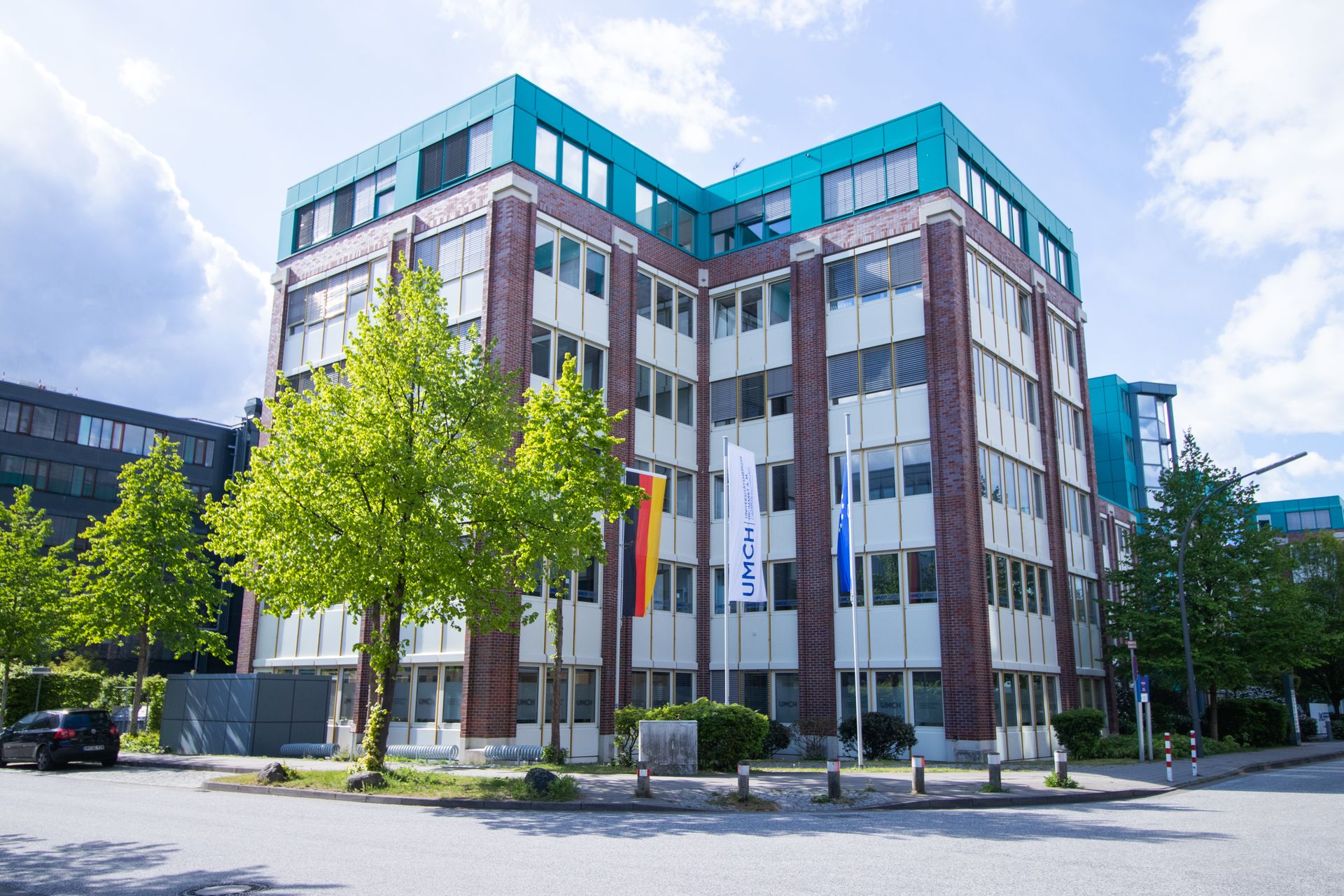
Study medicine in Europe without biology and chemistry A-levels: the UPJŠ Košice route
Let me get specific, because vague is useless. UPJŠ — Pavol Jozef Šafárik University, Faculty of Medicine — in Košice, Slovakia, runs General Medicine in English: a 6-year programme that awards the MUDr. (Doctor of General Medicine), equivalent to an MD. Here's what actually matters for a wrong-subjects applicant.
The entrance exam is a single written multiple-choice paper in Biology and Chemistry: 200 questions (100 biology, 100 chemistry), 2.5 hours, scored 0–4 points each for a maximum of 800. In General Medicine the acceptance pass mark is usually around 75%. That's it — no UCAT, no BMAT, no interview panel grilling you on your personal statement. Nail the bio and chem paper and you're in.
And the tuition? €13,000 a year for 2026/27. One thing most blogs skip: at UPJŠ, UPOL and UMCH your annual fee is locked when you enrol — it doesn't creep up year over year while you study. Six years is a flat multiplication, not a rising bill.
Timing for 2026: the next UPJŠ sitting is 12 August 2026 in Košice, Slovakia — an Oslo sitting was already held in July. And you don't need months of runway: you can usually still register up to about a week before a sitting, and Medently handles the registration, documents and prep for you — free. So even if you've only just found this route, you haven't missed the boat.
How to pass the biology & chemistry entrance exam (even if you never took them)
This is the bridge — the part every competitor skips. "Wrong A-levels" doesn't matter if you can pass the science paper, so the real question isn't can I apply, it's can I prepare. Yes. You can. I did it, and I'd taken a pretty scattered set of subjects myself.
The exam is recall-and-apply on a defined syllabus of secondary-school biology and chemistry — cell biology, genetics, human physiology, organic and inorganic chem, the classic stuff. It rewards structured repetition, not a two-year head start. That's exactly why we built free prep at Medently:
- Flashcards — spaced-repetition decks that drill the exact biology and chemistry topics the UPJŠ paper tests.
- Practice questions — in the same multiple-choice format as the real exam, so nothing on the day is a surprise.
- Timed mock exam — a full 200-question, 2.5-hour simulation so you walk in already knowing the pace.
Start with the UPJŠ practice test and flashcards — it's free, and it's the single fastest way to go from "I never took Bio or Chem" to "I can pass this." Genuinely, a motivated student with no science A-levels can get exam-ready in a few focused months.
More than one door: UPOL and UMCH
UPJŠ isn't the only option — it's just the one I know inside out. Two more Medently partners teach medicine in English:
- UPOL Olomouc (Palacký University, Czech Republic) — 6-year General Medicine (MUDr./MD), a long-established English programme, admission via the university's own entrance exam.
- UMCH Hamburg (Medical School Hamburg, Germany) — a 6-year MD taught fully in English, with a more assessment- and interview-led admissions style rather than a bio-chem cram.
Different vibes, same headline: none of them demand Biology and Chemistry A-levels as a subject prerequisite. If you want to compare them properly, my roundup of the top medical universities in Europe taught in English lays them side by side, and you'll find all Medently programs in one place.
Will the degree count back home? Recognition and licensing
This is the quiet fear for every wrong-subjects student: even if I get in, will the degree actually be worth anything? Short answer — yes, and it's not vague.
- Across the EU/EEA — a basic medical qualification from Slovakia (or Czechia) gets automatic recognition in every other EU/EEA country under EU Directive 2005/36/EC, where the training is listed in Annex V, point 5.1.1. That covers Norway too (autorisasjon via Helsedirektoratet).
- Back in the UK — post-Brexit it's not automatic, but it's a well-worn path. UPJŠ is listed on the World Directory of Medical Schools, and to register with the GMC as an international graduate you now sit the UKMLA — the Applied Knowledge Test plus the Clinical and Professional Skills Assessment — and meet the English-language and internship requirements. Plenty of UK doctors trained in Europe and came home exactly this way.
Six years, one MD, and a globally recognised path. If the "how long" part is on your mind, I broke it down in how many years it takes to study medicine in Europe.
What it actually costs vs the UK
Money is usually the second worry, so here's the honest comparison. Post-Brexit, UK students pay international fees of roughly £12,000–£21,000 a year at popular English-taught European medical schools. At UPJŠ specifically it's €13,000. Compare that with UK international medical fees of around £67,000 a year — yes, per year — and the European route stops looking like a compromise and starts looking like the smart financial move. And remember: no agency fees with Medently. We're free.
How Medently gets you there — free
Here's the part where a consultancy would pitch you a £3,000 package. We don't. Medently is genuinely free — guided applications, no agency fees, run by people who've actually done this (I transferred myself; several of our team did too). The rough timeline looks like:
- Pick your route — we help you choose between UPJŠ, UPOL and UMCH based on your grades, budget and timeline.
- Apply — we guide the paperwork, deadlines and school leaving certificate so nothing gets rejected on a technicality. Start at the application page.
- Prep the exam — flashcards, practice and the mock at /exams/upjs/test.
- Sit it, get in, enrol — and if you're mid-degree elsewhere, we also handle credit transfers.
If you want a human to sanity-check your specific situation — your exact A-levels, your grades, your timeline — just book a free call. No pressure, no sales pitch.
A note on the two newest universities we work with: NCU in Poland also admits by entrance exam but requires biology and chemistry or physics to appear on your diploma, and the University of Nicosia assesses your science grades directly — so with no science A-levels, UPJŠ, UPOL and UMCH remain your cleanest routes. If your grades are strong after all, the opposite door is mapped in Europe's no-entrance-exam medical schools.
FAQ
Can I study medicine without biology and chemistry A-levels?
Yes. Several English-taught European medical schools, including UPJŠ Košice, only require three A-levels in any subjects. You then sit the school's own Biology and Chemistry entrance exam — the science requirement is tested by that exam, not by your A-level subject choices.
What A-levels do you need to study medicine at UPJŠ Košice?
Three A-levels in any subjects, plus your school leaving certificate. UPJŠ's official admissions materials don't list Biology or Chemistry as a required A-level subject; eligibility runs through the biology/chemistry entrance exam instead.
How hard is the UPJŠ Košice entrance exam?
It's a 2.5-hour written multiple-choice paper: 200 questions (100 biology, 100 chemistry), max 800 points, with the General Medicine pass mark usually around 75%. Demanding but very learnable from a defined syllabus — even without science A-levels, a few focused months of flashcards and mock exams gets most students there.
Is a Slovak medical degree recognised in the UK?
UPJŠ is listed on the World Directory of Medical Schools, and its MUDr./MD is recognised automatically across the EU/EEA under Directive 2005/36/EC. For the UK it's not automatic post-Brexit: you register with the GMC by passing the UKMLA (AKT + CPSA) and meeting English-language and internship requirements.
Every Medently student gets free document handling, entrance-exam flashcards where there is an exam, and direct chat with current students at UPJŠ, UPOL, UMCH and RSU. No fees, no hidden costs.
Ready to apply to medicine or dentistry in Europe?
Talk to active students. 100% free advisory from Medently.
