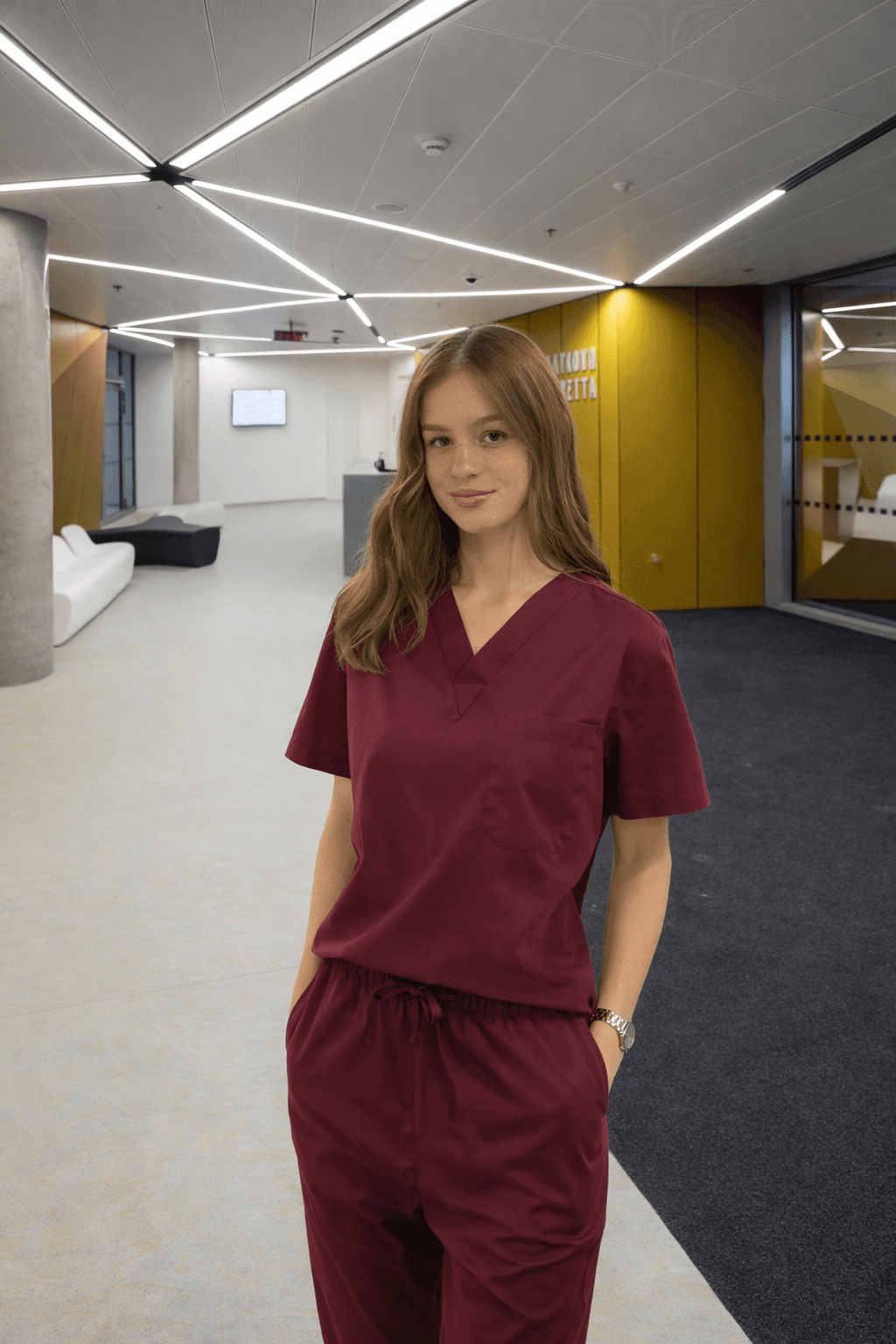
You can study medicine in Riga in English at Rīga Stradiņš University (RSU), a state university founded in 1950. The degree is a 6 year MD, tuition is €13,500 per year, and there is no entrance exam. Your high school grades and your documents decide it. For the February intake, applications open 1 September and studies begin 2 February 2027. See the full RSU programme →
Most people find Riga by accident. They start out googling how to get into medicine at home, they run into the same wall everyone runs into, and then somewhere around the fifth page of a forum thread somebody mentions a city in Latvia where you do not have to sit an entrance exam at all.
That is roughly how I found it too. I am Lisa, I study medicine abroad, and I spent a long time believing that the only way in was a perfect transcript or a brutal test day. Riga is the version of this story where neither of those things is true. So here is the honest breakdown of what studying medicine in Riga actually involves, what it costs, and who it genuinely suits.
Why medicine in Riga is different from almost everywhere else
Nearly every English taught medical programme in Europe puts a gate in front of you. UPJŠ in Košice runs a written biology and chemistry exam. Olomouc adds physics. At many universities the test is the whole story. You revise for months, you sit in a hall for two hours, and a single morning decides your next six years.
RSU does not do that. Admission in Riga is document based. There is no test to book, no question booklet to grind through and no exam day to be nervous about. The university reads your high school diploma, your grade list, your letters and your English, and it decides from that.
That sounds relaxing, and it is, but it also flips where the effort goes. When there is no exam to rescue a weak transcript, the transcript is the exam. Everything rides on getting the file right and getting it in early.
With no entrance exam to rescue a weak transcript, the transcript is the exam, and a complete application submitted early is the whole strategy.
No entrance exam does not mean no standards. It means the standard is your school record, and you cannot revise for that in July. What you can control is how complete and how early your application is.
What Rīga Stradiņš University actually asks for
For the 6 year Medicine programme taught in English, the requirements are specific and they are published. Nothing here is a secret filter.
- A high school diploma with a grade list — your vitnemål, A levels, IB diploma or the equivalent, with every subject and every grade visible.
- English at 70% or better — and if you finished high school in English, for example A levels, the IB or an American or Australian curriculum, you need no language test, just a school letter confirming English was the language of teaching. EU and EEA applicants with very good English grades on the transcript normally need no test either, while other applicants from outside the EU and EEA need a test such as IELTS 6.0.
- Chemistry or Biology at 70% or better — one of the two is required for medicine. Having both is an advantage, not an obligation.
- Mathematics — compulsory as a school subject. Physics is preferable but not required.
- No failing grades anywhere — every subject on the diploma needs at least a pass. A single failed subject is a rejection, and this catches more people than the science requirement does.
- Two recommendation letters and one motivation letter — on RSU's own forms only, signed by the referee, no older than two years. Never from a relative, a friend or anyone else with an interest in your application.
That last point is the one applicants underestimate. RSU will not accept a generic reference on school letterhead. It has to be their form, filled in and signed. We prepare these with every student because a wrong form is a delayed file, and a delayed file in a rolling admissions system is a worse seat.
One thing that does not apply to EU and EEA applicants but is worth knowing if you are reading this from further afield: RSU runs a mandatory online motivational interview for applicants who are citizens of countries outside the EU and EEA. It is a recorded conversation on Zoom, not an entrance exam, and declining it ends the application. EU and EEA citizens, Norwegians included, are not asked to do this.
Riga compared to the other English taught routes
Riga is not automatically the right answer. It is the right answer for a specific kind of applicant. Here is how it sits next to the other universities we work with.
| University | Entrance exam | Tuition | Intake |
|---|---|---|---|
| RSU, Riga 🇱🇻 | None | €13,500 / yr | February |
| UPJŠ, Košice 🇸🇰 | Biology, Chemistry | €13,000 / yr | September |
| UPOL, Olomouc 🇨🇿 | Biology, Chemistry, Physics | €12,500 / yr | September |
| UMCH, Hamburg 🇩🇪 | Online test | €25,000 / yr | October |
Read that table twice, because the interesting column is not the price. It is the exam column next to the price. Riga costs roughly the same as Košice and Olomouc, and about half of Hamburg, while asking you to sit nothing at all.
The 4 English taught routes at a glance
All four universities side by side: what you sit, what you pay and when you start.
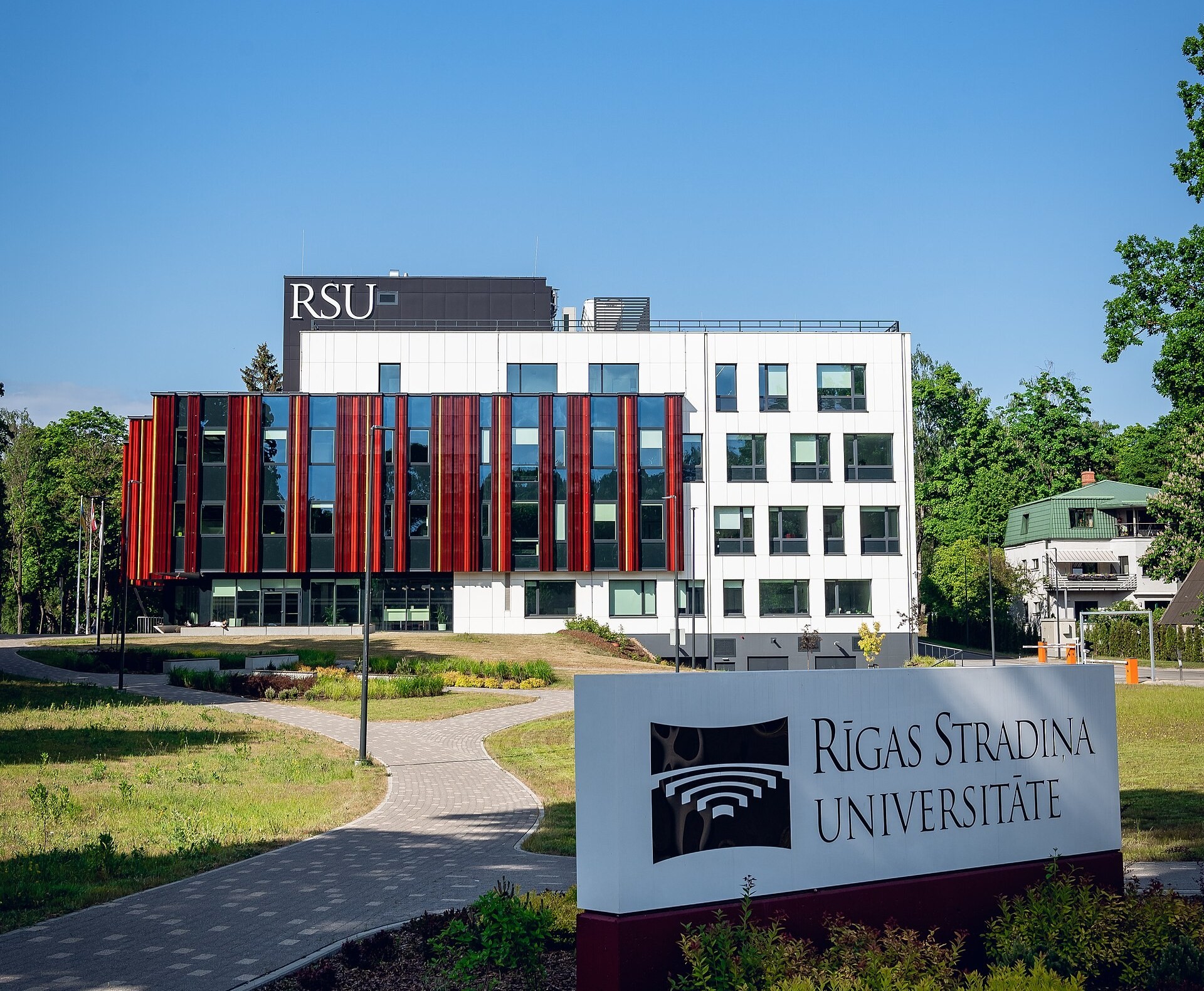
Riga, Latvia: no entrance exam at all
- No entrance exam, admission is document based
- Tuition €13,500 per year, February intake
- Application window runs 1 September to 1 December 2026
- Studies begin 2 February 2027
- Apply early in the rolling window, start your application
Košice, Slovakia: biology and chemistry exam
- Written entrance exam in biology and chemistry
- Tuition €13,000 per year
- September intake
- The exam is a second chance rather than a hurdle

Olomouc, Czechia: exam adds physics
- Entrance exam in biology, chemistry and physics
- Tuition €12,500 per year
- September intake
- Costs roughly the same as Riga and Košice

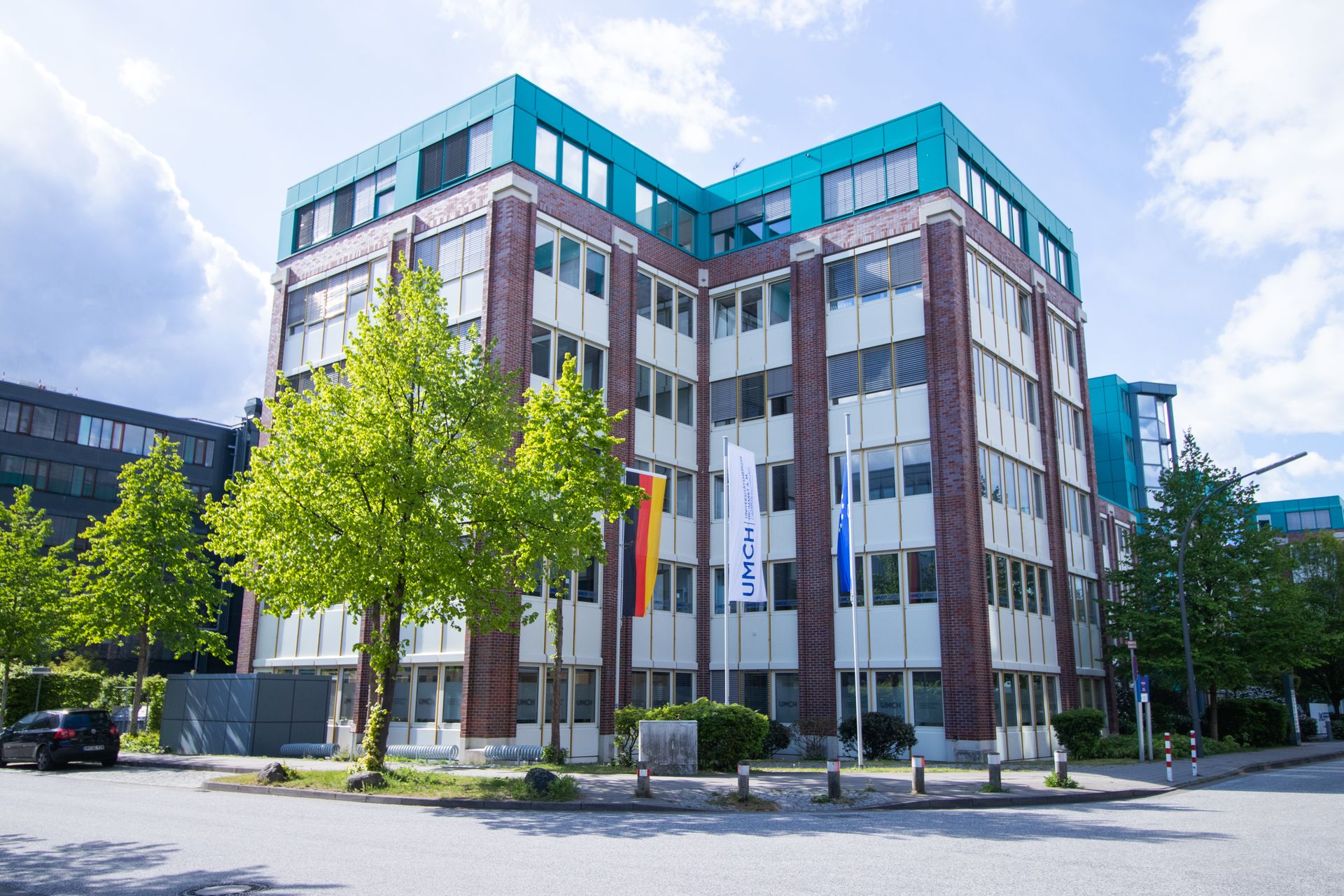
Hamburg, Germany: online test, October start
- Online entrance test
- Tuition €25,000 per year
- October intake
- Six years comes to €150,000 in tuition
What six years in Riga really costs
Annual tuition for medicine at RSU is €13,500, paid per semester. Here is how that lands against the other English taught programmes we know the numbers for.
At today's price, six years comes to €81,000 in tuition for Riga against €150,000 for Hamburg. Treat those as today's price rather than a locked quote: RSU publishes its fee table one academic year at a time, and no university guarantees a rate for six years. But tuition is never the whole bill, and this is the part most guides quietly skip:
- Application fee, €100 — paid directly to RSU, non refundable, and it is what puts your file in the queue.
- First tuition payment — due within two weeks of the registration date on your offer, and RSU reserves the right to set a shorter deadline late in the admissions window. Applying in November means you are that late window, so keep the money reachable.
- Medently's fee, €0 — we are paid by the universities, never by students. There is no agency invoice at any point.
What living in Riga actually costs
Here is where we are going to disagree with most guides, including some of the cheerful numbers floating around. RSU itself tells international students to budget a minimum of €1,200 a month including accommodation, and publishes its own breakdown. Latvia's national study portal quotes €450 to €700. Both are official. They cannot both describe the same student.
The honest reconciliation is that the number depends almost entirely on how you live. RSU's own published monthly budget:
| Monthly item | Sharing | Living alone |
|---|---|---|
| Rent | €300 | €500 |
| Food | €300 | €400 |
| Utilities | €200 | €300 |
| Transport | €50 | €50 |
| Going out | €100 | €150 |
| Other | €100 | €100 |
| Total | €1,050 | €1,500 |
You can go well under that. RSU runs three student hostels, and a room in one starts at around €105 a month for a triple and €140 for a twin. A student monthly pass covering all Riga public transport is about €12. So a genuinely frugal student month is closer to €600, and a comfortable one is closer to €1,200. Plan for €1,200 and be pleasantly surprised, rather than the other way around.
Against Oslo, the gap is the whole point. Riga is 47% cheaper than Oslo including rent, and rent by itself is 65% cheaper.
A few things that matter more than the brochure suggests:
- English really does get you through the day — Latvia ranks 16th in the world on the EF English Proficiency Index and Riga scores higher than the national average. You will pick up Latvian slowly and socially, not out of necessity.
- Oslo is an hour and a half away — non stop, with airBaltic and Norwegian running roughly 23 flights a week and one way fares starting around €46. Going home is a weekend, not an expedition.
- Winter is real — December has under seven hours of daylight and January averages around minus three. If you are Norwegian this is just Tuesday. If you are coming from further south, plan for it properly.
- It is about as safe as Oslo — Riga and Oslo score almost identically on walking alone at night, 57.2 against 57.2 on the crowd sourced Numbeo index.
- You will not be the only foreigner — roughly one in four RSU students comes from abroad, from more than 80 countries. There is no single dominant nationality to feel outnumbered by.
The February 2027 intake, step by step
This is where Riga stops being an idea and turns into dates. The application window for the February intake runs from 1 September to 1 December 2026 for EU and EEA applicants, and studies begin on 2 February 2027.
- Now through August. Get your grade list translated if it is not already in English, work out which science subject you are leaning on, and get the RSU letter forms in front of your teachers early. Nothing here needs the portal to be open.
- 1 September. The e-Admissions portal opens. Register, upload your documents and pay the €100 fee. Apply early in the window rather than late, because RSU only assesses a file once it is complete and an early file leaves room to fix problems.
- After you submit. Email RSU with your application number so the file enters processing. Skipping this step is the single most common way an application quietly stalls.
- Within two months of a complete file. A decision comes back. Admissions run on a rolling basis, so earlier really does mean sooner.
- January 2027. Registration fee, first tuition, housing, flights. Welcome Week runs 27 to 30 January.
- 2 February 2027. First lecture.
If you are reading this before September, you are early, and early is the whole advantage in a rolling system. That is genuinely the best position to be in.
Will the degree be recognised when I go home?
Yes. Latvia is an EU member state, and RSU is a state university whose Medicine programme is listed in the World Directory of Medical Schools under FAIMER school ID F0001780. The same WDOMS record is where you can read, from a third party rather than from us, that an entrance exam is not required. It also confirms that students and graduates are eligible to apply for ECFMG certification, which is the door to US residency if you ever want it.
The programme is accredited until 28 May 2030, and it has separately been reviewed by AHPGS in Germany, an accreditor recognised by the World Federation for Medical Education. A medical degree from an EU member state is recognised across the EU and EEA under the professional qualifications directive, which is the same mechanism that lets doctors trained in Slovakia, Czechia or Germany register at home.
For Norwegian students the practical route runs through Helsedirektoratet for authorisation, then LIS1. We have written that path out in detail on the authorisation guide and the LIS1 guide. It is a process with paperwork, not a barrier.
The UK is its own question, and we would rather be straight with you than sell you something. Registration there runs through the General Medical Council, and the rules for European qualifications changed after Brexit. If the UK is where you intend to practise, read the GMC's current requirements yourself before you commit six years, rather than trusting any agency page on the subject, ours included. What is not in doubt is the EU and EEA side, and that is where most of our students end up.
Who Riga is actually right for
Being honest about fit is more useful than selling. Riga is a strong choice if you have a solid, clean transcript and you want to skip the exam lottery entirely. It is a strong choice if you missed the September round and do not want to lose a whole year waiting. And it is a strong choice if you want an EU capital rather than a small university town.
It is a weaker choice if your school record has a failing grade on it, or if your grades are genuinely low and you were counting on an exam to prove yourself. In that case UPJŠ in Košice or UPOL in Olomouc may suit you better, because there the exam is a second chance rather than a hurdle. If you are not sure which side of that line you are on, that is exactly the conversation to have with us.
FAQ
Is there really no entrance exam to study medicine in Riga?
Correct, and you do not have to take our word for it. The World Directory of Medical Schools record for RSU states that an entrance exam is not required. Your diploma, grade list, English, letters and application fee are the whole assessment. The one exception is that applicants from outside the EU and EEA also sit a recorded online motivational interview, which is a conversation, not a test.
How much does it cost to study medicine in Riga?
€13,500 per year, which at today's price is €81,000 across six years. On top of that there is a €100 application fee, and we walk you through the full payment schedule before you commit. For living costs, RSU tells students to budget at least €1,200 a month including rent, though a hostel room and a bit of sharing brings that a long way down.
Do I need chemistry and biology to apply?
For medicine you need chemistry or biology at 70% or better, not both. Both is an advantage. Mathematics is required as a school subject and physics is preferable. Dentistry works the same way — one science is enough — though RSU gives applicants who have both priority in selection, which we cover in the dentistry guide.
When can I apply for the February intake?
The window for EU and EEA applicants runs 1 September to 1 December 2026, and studies begin 2 February 2027. Because RSU decides on a rolling basis once a file is complete, applying near the start of the window is meaningfully better than applying near the end.
Does Medently charge for helping me apply?
No. Medently is free for students, always. We check your eligibility, prepare the documents and letters, submit through the RSU portal and stay with you through visa, housing and arrival. Universities pay us, you never do.
Every grade threshold, the full document checklist and the February intake deadlines live in our RSU admission guide.
Every Medently student gets free document handling, entrance-exam flashcards where there is an exam, and direct chat with current students at UPJŠ, UPOL, UMCH and RSU. No fees, no hidden costs.
Ready to apply to medicine or dentistry in Europe?
Talk to active students. 100% free advisory from Medently.
