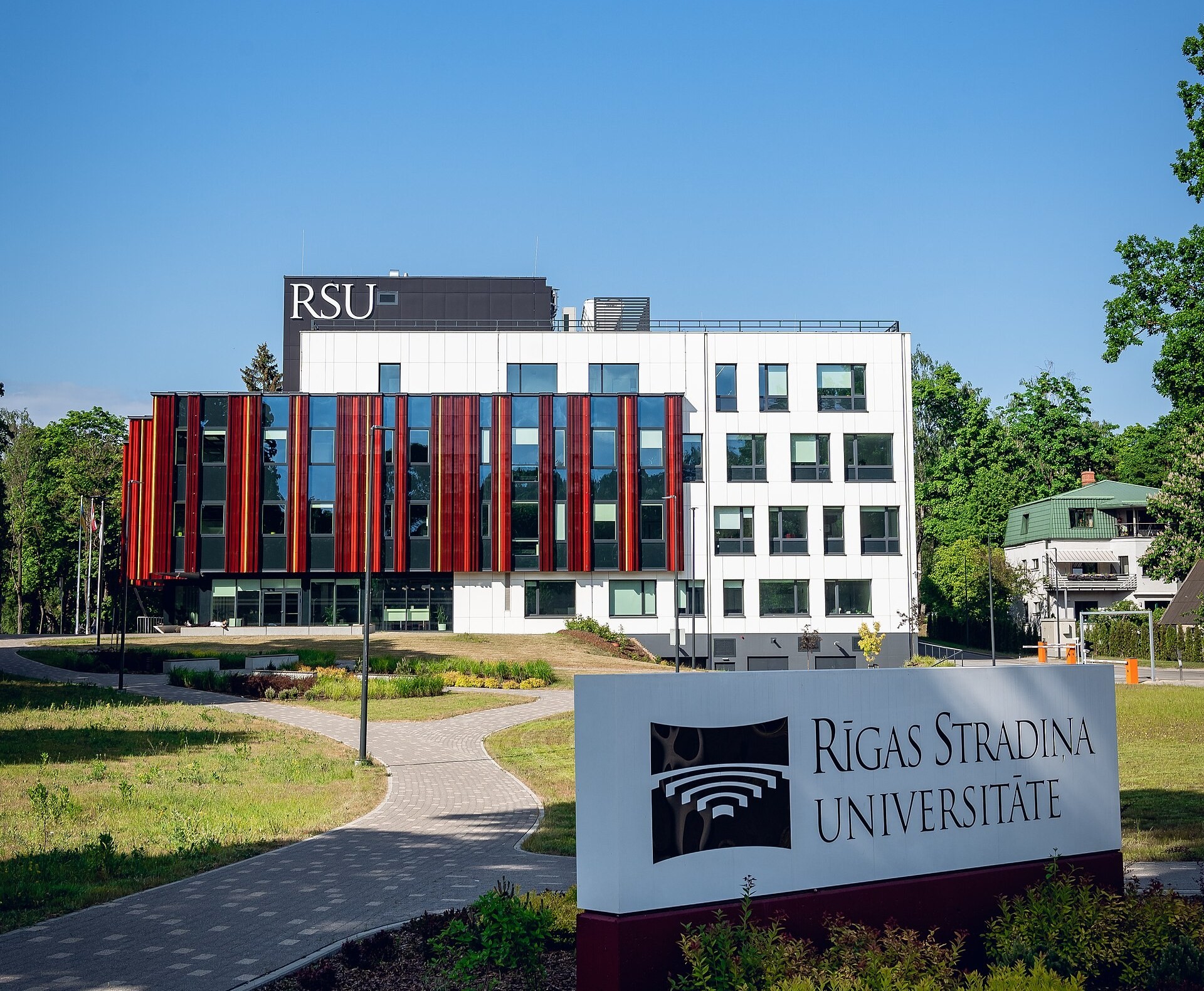
Most European dental schools build admission around A-level Biology and Chemistry, but the bar varies massively. Rīga Stradiņš University (RSU) in Riga, Latvia scores your actual A-levels with no entrance exam (Biology or Chemistry at 80% of the top grade for Dentistry), while Pavol Jozef Šafárik University in Košice (UPJŠ), Slovakia sets no subject or grade requirements at all: one science exam decides everything. See where your exact grades fit in two minutes with our free Can I Get In checker.
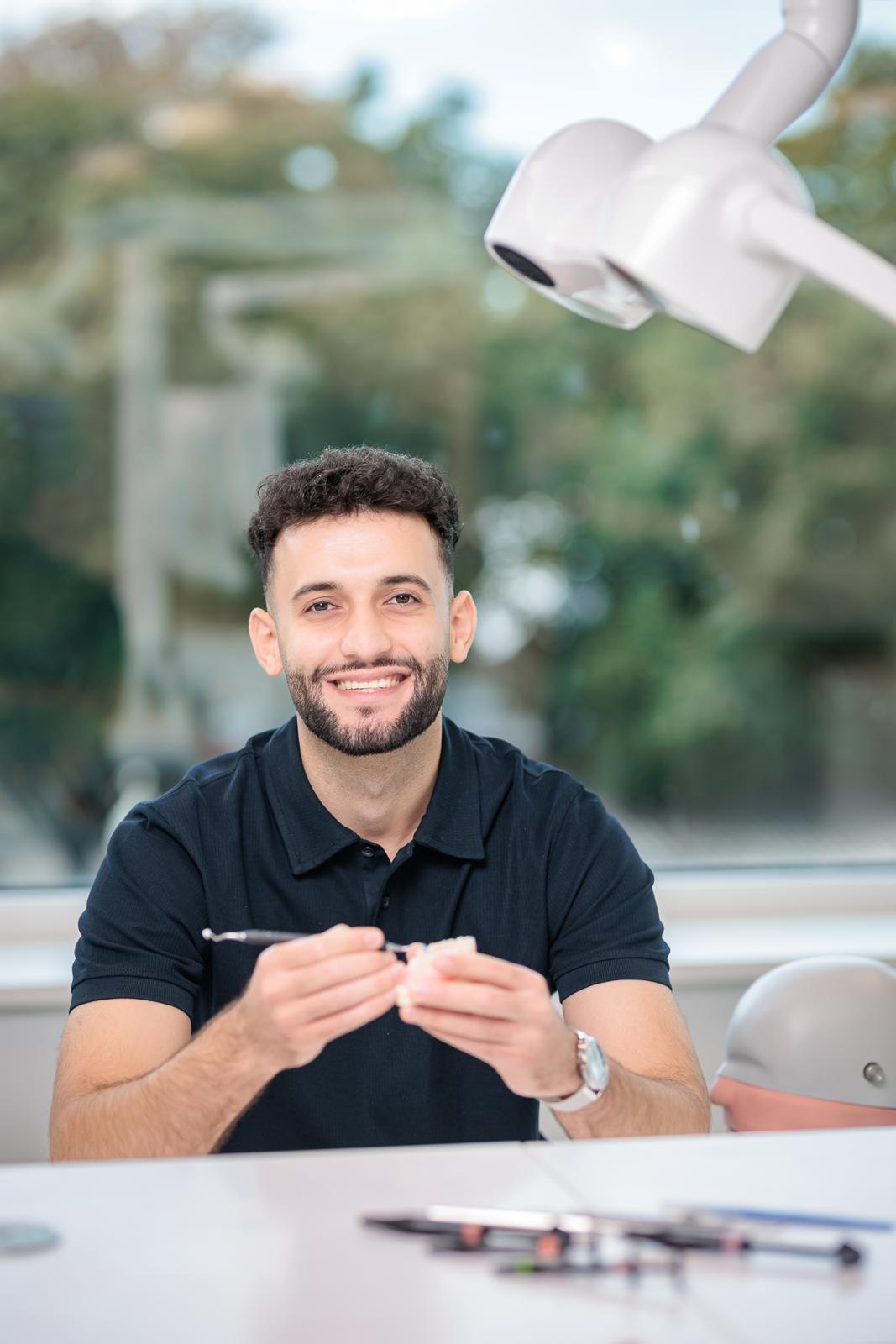
Hey, it's Omar from Medently. Every August my phone fills up with the same message: fresh A-level results in hand, frantic mental maths, and a Google search for A-level requirements for dentistry in Europe to figure out what's actually still possible. I'm the dental student on the team, I went through the study-abroad process myself, and we walk dentistry applicants through this exact morning every year. So this is the post I wish existed for them. Not a fifteen-university listicle that mumbles "ABB including biology and chemistry" and moves on, but an actual map of which European dental schools care about your grades, which ones genuinely don't, what everything costs, and what you can still start from exactly where you're sitting.
The headline, before anything else: whatever your results say, you have a route. Good grades? There's a university that scores them directly, with no entrance exam, no UCAT and no personal statement theatre. Grades went sideways? There's a university that never even looks at them. Both roads end in a 5-year English-taught dentistry degree in the EU. Let's talk.
First, the UK reality check
Let's be honest about why you're here. UK dentistry (the BDS) is brutal to get into. King's College London asks for A*AA at A-level for its Dentistry BDS, and that's the entry ticket, not the decision. Stack the UCAT on top, then interviews, then an applicant-to-seat ratio that turns genuinely capable people away every single August. Missing an offer by one grade can end the whole UK plan, and it says precisely nothing about whether you'd make a good dentist.
Every European dental school in this guide works one of two ways: your A-levels are the application, or an entrance exam wipes the slate, so whatever your results say, you have a route.
Europe plays a different game. English-taught dentistry programmes across the EU run five years, sit inside EU professional-qualification law (more on the GDC and coming home in a minute), and admit people on criteria that are refreshingly transparent. There are two systems, and understanding the split is 90% of the strategy.
The two routes in: grades scored, or exam decides
Every European dental school in this guide works one of two ways:
- Route 1: your A-levels ARE the application. No entrance exam. The university takes your real results, scores them against a published bar, and ranks you. Brilliant if results day went well, because you convert good grades straight into a dental school place without sitting another test. This is Rīga Stradiņš University (RSU) in Latvia.
- Route 2: an entrance exam wipes the slate. The university doesn't ask for subjects, grades, or anything UCAS-shaped. One science exam decides, full stop. Brilliant if results day did not go well, because your envelope never enters the room. This is UPJŠ in Košice, Slovakia, and (for the next intake) Palacký University Olomouc in the Czech Republic.
Weirdly, none of the big ranking pages frame it this way, and it's the only framing that matters. "Can I get in?" has a completely different answer depending on which route you're standing in. Good grades: Route 1, apply direct. Below the bar: Route 2, sit an exam that ignores your grades. Everything below is just detail.
The 3 dentistry routes at a glance
Three universities that cover every grade band a UK student can be holding today.
Riga, Latvia: your grades are the application
- No entrance exam, ever: your actual A-levels are scored
- Biology or Chemistry at 80% of the top grade for Dentistry
- 5-year English-taught DDS at €15,500 a year
- Window opens 1 September and runs to 1 December 2026
- Roughly 32 international Dentistry places, decisions rolling
Košice, Slovakia: one exam, grades never scored
- No subject requirements, no grade minimum, no UCAS
- 100 biology plus 100 chemistry questions, 800 points
- Recent dentistry threshold around 620 out of 800
- Next sitting 5 September 2026, tuition €13,500 a year
- Free question bank: 599 biology and 594 chemistry questions

Olomouc, Czech Republic: the next-intake play
- Three A-levels in any subjects, sciences not required
- No grade minimum, own online science exam plus Zoom interview
- 5-year English-taught MDDr at €14,000 a year
- Around 20 places a year, admission ranked by score

A-level requirements for dentistry in Europe: the map
| University | A-levels | Route |
|---|---|---|
| RSU, Latvia | Bio or Chem, 80% | Grades scored, no exam |
| UPJŠ, Slovakia | None required | Entrance exam decides |
| UPOL, Czechia | Any 3 subjects | Exam, next intake |
Three universities, on purpose. The listicles that "cover" twelve to seventeen schools give you one vague sentence per country and zero decision logic. These three cover every grade band a UK student can be holding today, with real numbers behind each one. Quick notes on the map:
- Only one science? RSU needs Biology or Chemistry, not both (though applicants with both are prioritised in selection). UPJŠ doesn't check your subjects at all; you'll simply need to learn the biology and chemistry for the exam itself.
- No sciences at all? UPOL told us in writing that sciences are not required among your three A-levels; their own exam covers the science.
- UCAT? Nope. None of these universities uses it. That whole industry stays in the UK.
- Where's Germany? UMCH Medical Campus Hamburg, Germany, our fourth partner university, teaches medicine only, so it doesn't belong on a dentistry map. Don't let anyone tell you otherwise.
Which route are you standing in? Grade band by grade band
Before the deep dives, let's make this concrete, because "check the requirements" is useless advice when you're holding an actual results slip. Find your band:
- A*A*A* to ABB with a strong Biology or Chemistry: you're a Route 1 candidate. If your science grade clears RSU's 80% bar, your results are already a competitive application; you don't need to sit anything. File early in the window (it opens 1 September) because decisions are rolling and the international Dentistry places are limited.
- Decent results, but the science grade is the weak spot: this is the band where people wrongly give up. If your Biology or Chemistry misses RSU's bar, you haven't run out of road. You've just switched routes. UPJŠ never sees your grades; three weeks of proper question-bank prep matters more than two years of coursework ever did.
- Results day went badly across the board: straight to Route 2, and honestly with a lighter heart than you'd expect. The UPJŠ exam is a reset button: 200 science questions, and the person who prepared best wins, regardless of what happened in sixth form. We've watched students who were written off in the UK system clear it and thrive.
- No sciences at A-level at all: trickier, but not closed. UPJŠ doesn't require science subjects, only science knowledge, and the question bank teaches you exactly what the paper asks. UPOL requires three A-levels in any subjects for the next intake, with their own exam covering the science. Give yourself a longer runway and it's very doable.
Not sure which band you're in? That's literally what the free checker is for. It maps your exact subjects and grades against every university we work with, in about two minutes.
Got good grades? RSU scores them, no entrance exam
If your results came in strong, Rīga Stradiņš University (RSU) in Riga, Latvia should be the first tab you open. It's the Route 1 school: no entrance exam, ever. RSU takes your actual A-levels and GCSEs, plus a motivation letter and two references, scores the lot, and ranks you. The grades you picked up this week are the application.
Here's what RSU wants to see for Dentistry:
- Biology or Chemistry at A-level: RSU's published bar for Dentistry is 80% of the top grade in the required subject (Medicine sits at 70%). Bring both sciences and you get priority in selection.
- English and Maths: both compulsory in your school package. UK-taught students need no English test at all — RSU exempts anyone whose secondary education was completed in English, and may ask your school for a letter confirming the language of instruction. One insider tip: don't upload an English test "just in case". Once a test result is in your file it is what gets scored, so an unnecessary certificate can only work against you.
- 3 A-levels and 3 GCSEs passed: the baseline paperwork. If your subject mix is unusual, ask us and we'll check it against RSU's list before you apply.
Two things people consistently miss. First, your overall average is never used. RSU scores the required subjects, so one rogue grade in an unrelated A-level doesn't sink you. Second, the motivation letter and both references are genuinely scored, not box-ticking. Put real effort into them; they're free points that most applicants throw away.
The degree is a 5-year, English-taught DDS (Doctor of Dental Surgery), accredited into 2030, at €15,500 a year. And the timing could not suit an August results day better. RSU runs the February intake: the application window opens 1 September and runs to 1 December 2026, with studies starting 2 February 2027. Decisions are rolling and there are roughly 32 international Dentistry places, so strong files that arrive early do best. Results in August, application in September, drilling (plastic) teeth in Riga by February. We've gone deeper on the whole city-and-course experience in Study Dentistry in Riga.
Grades not what you hoped? UPJŠ never asks for them
Now the route for everyone whose morning didn't go to plan. Pavol Jozef Šafárik University in Košice (UPJŠ), Slovakia runs a 5-year English-taught MDDr (Doctor of Dental Medicine), and its admissions process has one beautiful property: your A-levels are never scored. No subject requirements, no grade minimum, no UCAS, no personal statement, and no IELTS asked of our applicants. One written paper decides everything: 100 biology questions plus 100 chemistry questions, 800 points on the table, two and a half hours, in English, sat in Košice.

Real talk though, because I'd rather you hear it from us than discover it the hard way: the dentistry bar at UPJŠ is genuinely high. The recent acceptance threshold for dentistry has sat around 620 out of 800, meaningfully above the medicine cut, so treat prep as the whole job and aim to clear that line with room to spare. The good news is that this exam is very learnable. It's a fixed syllabus of biology and chemistry multiple choice, and we give away an official-style question bank, 599 biology and 594 chemistry questions, completely free at medently.com/exams/upjs/test. That bank is how people pass. Grind it until your practice scores sit comfortably over the bar.
On timing: relax. Sittings run right through the summer, and the next one is 5 September 2026, which lines up perfectly with an August results day, because three-plus weeks of focused prep is a real window. Registering through Medently is free and usually possible until about a week before the sitting, so you haven't missed anything. Tuition is €13,500 a year, the lowest of the three, and UPJŠ's own programme page notes the MDDr is recognised in any EU country. Full country guide here: Study Dentistry in Slovakia in English.
UPOL: the next-intake play
Palacký University Olomouc (UPOL), Czech Republic is the third dentistry school on the map: a 5-year English-taught MDDr at €14,000 a year, in one of the loveliest student cities in central Europe. I'll be straight with you about this year. Applications for the September 2026 start ran to 31 July, and the 2026 dentistry seats filled, with later exam passers moving to a waiting list. So UPOL isn't a this-autumn move. It's the one you plan properly for the next intake.
And it's absolutely worth planning for, because the requirements profile is the friendliest of the lot: three A-levels in any subjects (the faculty told us in writing that sciences are not required), no grade minimum, their own online science exam covering biology, chemistry and physics or maths, plus a short Zoom interview, with admission ranked by score. Places are limited, around 20 a year, which is exactly why the smart move is deciding early rather than keeping UPOL as a vague backup. If a 2027 start fits your plan, shortlist it now on the UPOL page and we'll flag the moment the next cycle opens.
What dentistry in Europe actually costs
Exact 2026/27 tuition, from the universities themselves, not "fees from €X" ranges:
- UPJŠ, Slovakia: €13,500 a year, set in the university's official fee decision for 2026/27.
- UPOL, Czech Republic: €14,000 a year.
- RSU, Latvia: €15,500 a year for Dentistry.
And here's a detail that matters more than people realise: at UPJŠ and UPOL, the fee you enrol on is the fee you keep. Your tuition doesn't creep upwards mid-degree, so the total really is honest multiplication: five years at UPJŠ is €67,500 in tuition and UPOL €70,000, known on day one. RSU works differently — €77,500 at today's price, published one academic year at a time, plus a one-off €1,800 registration fee. Compare that with five years of UK home fees plus UK maintenance costs (and the small matter of needing A*AA to even sit at the table), and the numbers stop feeling exotic. Day-to-day living in Košice, Olomouc or Riga is kinder to a student budget than any UK university city, too. If "cheapest" is the deciding factor, UPJŠ in Slovakia wins on both tuition and cost of living.
Medently's part costs you nothing, ever. We're a free service founded and run by medical students who've been through the study-abroad process ourselves. No agency fees, no commission from you, no catch. Any exam fee that exists goes straight to the university, never to us.
English requirements (short and painless)
Everything in this post is taught 100% in English, and for UK students the language box is mostly pre-ticked:
- RSU: no English test for UK-taught students — RSU exempts anyone whose secondary education was completed in English, and may ask your school for a letter confirming the language of instruction. Remember the tip above: don't upload a test you do not need.
- UPJŠ: no IELTS asked of our applicants; the entrance exam itself is in English, and that's the real filter.
- UPOL: IELTS 6+, TOEFL 87+, PTE 59+ or the university's own English test.
Coming home: DDS vs MDDr vs BDS, and the GDC
A quick titles decoder, because the alphabet soup confuses everyone. The UK dental degree is the BDS. RSU awards a DDS (Doctor of Dental Surgery). UPJŠ and UPOL award the MDDr (Doctor of Dental Medicine, equivalent to a D.M.D.). Different letters, same profession: dentist.
Now the part every parent asks about. Dental training in the EU is standardised by EU Directive 2005/36/EC. Article 34 requires at least five years of study comprising at least 5,000 hours of full-time theoretical and practical training, which is exactly the shape of these 5-year programmes. Inside the EU/EEA, that directive is the framework that lets a Riga or Košice graduate have their qualification recognised across member states.
For the UK: dentists register with the General Dental Council (GDC), not the GMC, which is for doctors. (Mixing those up is the fastest way to spot an article written by someone who has never done this.) Post-Brexit nothing is automatic, but the GDC currently registers holders of EEA dental qualifications listed in Annex V of the directive under what it describes as a near-automatic system, and those standstill arrangements were reviewed in 2023 and extended by five years, to 2028. For qualifications outside that route, the fallbacks are the Overseas Registration Exam (ORE) or the Licence in Dental Surgery (LDS). Rules evolve, so always sanity-check your specific programme with the GDC before enrolling. For the fuller picture we keep a dedicated guide updated: Is a European degree recognised in the UK?
Your results-day timeline: what you can still start
Here's the calendar that actually matters from where you're sitting in mid-August:
- This week: run your exact grades through the free Can I Get In checker. Two minutes, and it tells you which route you're standing in.
- Late August: going the UPJŠ route? Lock in the 5 September sitting (we register you for free, usually possible until about a week before) and live in the question bank until your practice scores clear the dentistry bar with room to spare.
- 1 September: RSU's application window for the February intake opens (it runs to 1 December 2026). Decisions are rolling, so if your grades clear the 80% bar, this is the week to file. Studies begin 2 February 2027.
- This autumn: eyeing UPOL for a 2027 start? Begin prep now; ranked admission rewards the people who decided early.
Notice what's not on that list: panic. Between an exam sitting in early September and an application window that hasn't even opened yet, an August results day leaves you early, not late.
If today has you weighing medicine rather than dentistry, a 2026 start is still genuinely open. Nicolaus Copernicus University, Collegium Medicum in Bydgoszcz (NCU), Poland, a university we apply to on your behalf, runs two September rounds for its 6-year English medicine programme: register by 25 August for the written test on 8 September (50 questions: 30 biology, 12 chemistry, 8 physics) with the oral on 9 September and results on 11 September, or apply between 26 August and 15 September for the round sitting on 23 and 24 September. Classes start 1 October. UPJŠ's 5 September paper covers medicine too, and the medicine cut sits below the dentistry one. UMCH Medical Campus Hamburg, Germany (medicine only) runs set online sittings over the summer; ask us for the next date and we'll register you. The full grade-by-grade breakdown lives in our A-level requirements for medicine in Europe guide, or just apply free and we'll route you, or grab a quick call to talk it through.
FAQ
What A-levels do you need for dentistry in Europe?
It genuinely depends on the university. Rīga Stradiņš University (RSU) in Latvia wants Biology or Chemistry at 80% of the top grade for Dentistry, with English and Maths in your school package and 3 A-levels plus 3 GCSEs passed. Pavol Jozef Šafárik University (UPJŠ) in Slovakia sets no A-level subject or grade requirements at all; one biology and chemistry entrance exam decides admission. UPOL in the Czech Republic asks for three A-levels in any subjects plus its own science exam.
Can you study dentistry in Europe without an entrance exam?
Yes. RSU in Riga, Latvia admits Dentistry students on school grades, a motivation letter and two references, with no entrance exam at all. The February intake application window runs 1 September to 1 December 2026, decisions are rolling, and studies begin 2 February 2027.
Can I get into dentistry with low grades?
Yes. At UPJŠ in Košice, Slovakia your A-level grades are never scored. A 200-question biology and chemistry entrance exam (800 points) decides everything, so a strong exam performance completely replaces a weak results day. The recent dentistry threshold has sat around 620 out of 800, comfortably above the medicine cut, so serious prep with the free question bank is the whole strategy. The next sitting is 5 September 2026.
Can I practise in the UK with a European dental degree?
Dentists register with the GDC, never the GMC (that one is for doctors). The GDC currently registers holders of EEA dental qualifications listed in Annex V of EU Directive 2005/36/EC under a near-automatic system, with the arrangements reviewed in 2023 and extended to 2028. Outside that route, the ORE or LDS exams apply. Always confirm your specific programme with the GDC.
Whatever your envelope said this morning, there's a seat in a European dental school with a realistic path to it. Our students are proof that both routes work, the grades-scored one and the exam one. Run your numbers, pick your route, and we'll walk the rest with you. For free, always.
Every Medently student gets free document handling, entrance-exam flashcards where there is an exam, and direct chat with current students at UPJŠ, UPOL, UMCH and RSU. No fees, no hidden costs.
Ready to apply to medicine or dentistry in Europe?
Talk to active students. 100% free advisory from Medently.
